Digging in Deeper: Ephesians 6:5-9

“Bondservants, obey your earthly masters with fear and trembling, with a sincere heart, as you would Christ, not by the way of eye-service, as people-pleasers, but as bondservants of Christ, doing the will of God from the heart, rendering service with a good will as to the Lord and not to man, knowing that whatever good anyone does, this he will receive back from the Lord, whether he is a bondservant or is free.  Masters, do the same to them, and stop your threatening, knowing that he who is both their Master and yours is in heaven, and that there is no partiality with him.”  (ESV – Read the chapter)

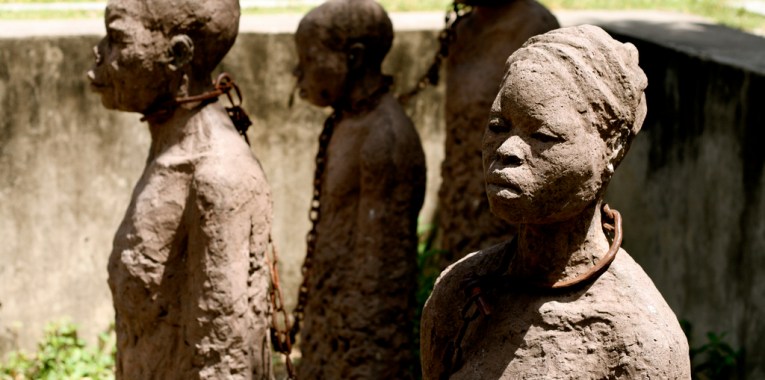
Passages like this one often get the Bible criticized for being pro-slavery, or at least not sufficiently condemnatory of it.  Why wouldn’t Paul just come out here and declare it to be the evil it obviously is?  There are two reasons, I think.  One helps us understand the culture into which Paul was writing better, the other points to how God has nearly always moved people forward toward the ethic of His kingdom. Read the rest…

Morning Musings: Colossians 3:5

“Put to death therefore what is earthly in you; sexual immorality, impurity, passion, evil desire, and covetousness, which is idolatry.”  (ESV – Read the chapter)

This is tough language here.  Paul seems to soften a bit a couple of verses later, but that’s just an appearance.  This is what Paul really means.  When it comes to the fruits of sin in our lives–and they are manifold well beyond the list Paul offers here–it is not enough to put them aside or turn our backs to them or knock them off their perch or anything else like that.  We must actively put them to death.  We must kill them completely and not allow for even the slightest chance that they will get up again. Read the rest…

A Crazy Idea

This past Sunday we began a brand-new teaching series at First Baptist, Oakboro, called God Moved into the Neighborhood.  Over the course of the next few weeks leading up to Christmas, we are going to unpack the marvelous truth that when our world was broken nearly beyond repair, God moved into the neighborhood in the person of Jesus Christ in order to transform it from the inside out.  With the help of some unexpected passages of Scripture for this time of year, we will unpack just how amazing this truth is, how the process of transformation unfolds, and how we should respond to it.  Don’t miss a single part of this powerful story.

A Crazy Idea

Have you ever had the opportunity to drive through an old neighborhood and thought, “Why haven’t they just bulldozed this whole place?  This is a mess!  This is an eyesore!  The people still living here should get a medal.”  You may have heard about the challenges facing the city of Detroit over the past few years.  World Magazine did a feature story on one neighborhood in the city a couple of years ago as a way of giving some perspective on how things really are.  Because of the city’s well-publicized problems, the neighborhood had been pretty much forgotten.  One in three homes had been abandoned.  Street lights didn’t have power going to them anymore.  There was no police coverage for the neighborhood due to budget restrictions.  There are no good grocery stores nearby.  Jobs are scarce.  Folks in the neighborhood have started doing basically some urban farming in order to provide food for themselves and their neighbors.  They raise a variety of produce as well as chickens and goats.  And when asked whether or not all this was legal within city limits they essentially said, “We’ll worry about forgiveness if we ever get caught…in the meantime, we’ve got to survive.”  Closer to home, though, some of you have perhaps driven through some of the more run-down neighborhoods of Charlotte or even Albemarle; neighborhoods where you didn’t really feel safe even driving down the street.  How do we respond to a place like this? Read the rest…

Morning Musings: Daniel 1:8

*This will be a longer Morning Musing, but I wanted to draw your attention to the case being argued tomorrow before the Supreme Court.

“But Daniel resolved that he would not defile himself with the king’s food, or with the wine that he drank.  Therefore he asked the chief of the eunuchs to allow him not to defile himself.”  (ESV – Read the chapter)

Daniel’s situation was a difficult one.  He had been taken from his home, away from everything familiar, and dropped into the deep end of a cultural situation alien to his own at every point.  What’s more, he was expected to adapt to it fully.  His masters had in mind for him to become a leader in his new nation, but they intended to make him one of them first.  Oh, and he was a teenager.

In many ways, as our culture continues to change and shift away from anything recognizably Christian, we are facing a situation not so different from Daniel’s.  On multiple occasions recently, governmental appointees to a variety of different positions who had made public statements orally or digitally that exposed them as orthodox Christians were grilled by the congressional committees tasked with interviewing them about the moral commitments that came along with their faith commitments.  In each of these situations, at least one member of the committee suggested that they weren’t fit for their appointed positions because of their beliefs.  This is a blatant violation of the Constitution’s prohibition on establishing religious tests for serving in public office, but in the new cultural day, cultural fidelity is more important than constitutional fidelity.

Tomorrow, the Supreme Court will hear arguments in the case Masterpiece Cakeshop v Colorado Civil Rights Commission.  The outcome of this case will have a profound impact on the legal and cultural understanding of the extent of the freedoms granted by the First Amendment and what it actually means to have sincerely held religious beliefs, including whether or not it is legal to express those publicly and how.

There is a growing list of victims of those who have resisted the LGBT revolution because of their religious beliefs.  Standing for the exclusivity of the Gospel can get you in trouble in many places.  In the academy, particularly in the various departments of science, holding to a belief about the origins and development of life other than the Neodarwin orthodoxy can result in a host of repercussions ranging from reassignments to refusal of tenure to loss of employment and blacklisting for future opportunities.

If we don’t speak the language, eat the food, drink the wine, and worship their gods, the pressures on us to do so will mount quickly and our refusals won’t be met with patience and tolerance.  They will be met with anger and hostility.  Even those folks who like us will be hesitant to help us because of their fear of the repercussions they will face for doing so.  In the last presidential election season, a couple of homosexual hotel owners in New York were publicly scorned and shamed by the larger gay community because they sat down to have a meal with then-candidate Ted Cruz.  They weren’t interested in changing their position at all, just in having a conversation to understand each other better.

The questions and challenges before us, then, are similar to those which sat before Daniel.  Perhaps the primary question we need to answer is this: Where will we draw the line?  How far will we go along with the cultural tide before we stand our ground?  On which points will we compromise our comfort because it doesn’t conflict with our faith, and on which points will we stand firm because our faith doesn’t allow us to go along?

Daniel drew a line at eating the food.  Ironically, this was a point on which he could have compromised on religious grounds, but the food he ate was something which gave him an identity as a follower of the One True God.  Thus, he drew a line.  It was a small thing, perhaps, but a significant one.  It marked him out in a way that wasn’t going to be in anybody’s face, but which everyone would notice as different from everybody else.  So, he drew a line.  Then, he sought to hold the line and trusted that God was going to help him.

But, how he held the line mattered.  It matters for us too.  Daniel was never aggressive or arrogant in his line drawing.  He was not rude or demanding.  He had a sterling character and was incredibly humble.  This is the pattern we must follow.  If we are going to draw and hold a line of distinction, our character must be absolutely above reproach.  We need to be in a position of accountability.  We must be humble and gracious to those who are going to oppose us.  And, we must be prepared to pay the price for holding our line, all the while trusting that our heavenly Father is going to help us hold it.

The culture around us is changing.  There’s no denying that.  It is changing in ways that are not to our comfort and advantage.  It will increasingly become more and more hostile toward us as the days roll on.  We will have to decide whether we will roll with the tide or draw a line and stand our ground.  Daniel is our model if we will follow him.  He is also our confidence that when we are wiling to stand firm in our faith, we will do it with help from our God.  He will never leave us nor forsake us.  We must be ready to do the same.

Digging in Deeper: Philippians 3:8-11

“Indeed, I count everything as loss because of the surpassing worth of knowing Christ Jesus my Lord.  For his sake I have suffered the loss of all things and count them as rubbish, in order that I may gain Christ and be found in him, not having a righteousness of my own that comes from the law, but that which comes through faith in Christ, the righteousness from God that depends on faith–that I may know him and the power of his resurrection, and may share his sufferings, becoming like him in his death, that by any means possible I may attain the resurrection from the dead.”  (ESV – Read the chapter)

What would you be willing to do to get the thing you want most?  That kind of question appears in many different contexts.  But, its focus nearly every time is aimed at discovering the lengths to which someone is willing to go to achieve some highly desired end.  And most often, the kinds of things that are imagined for the person to do fall outside and even well beyond the borders of what was previously considered morally acceptable.  But, the goal is sufficiently desirable that violating previously held moral and ethical boundaries is seen as a worthy price to pay.  Consider the basic plot of a story like the Taken trilogy.  A man’s daughter is kidnapped and he makes clear to her kidnappers that he will stop at literally nothing to get her back safely.  The ends in this case justify the means deemed necessary to reach them. Read the rest…