“Everything is from God, who has reconciled us to himself through Christ and has given us the ministry of reconciliation.” (CSB – Read the chapter)
This is another one of those verses I have looked at and studied before, but which I was recently given the lens to see in a new light I had not considered before. This isn’t a new interpretation of what Paul was saying, but rather an extension of its application to another area of life. This morning, I want to take a look at what the ministry of reconciliation God has given us has to do with our work.
“Do your work for six days but rest on the seventh day so that your ox and your donkey may rest, and the son of your female slave as well as the resident alien may be refreshed.” (CSB – Read the chapter)
One of the virtues that lies – in theory – at the heart of the United States is equal treatment before the law. The idea is that the law is supposed to be a level playing field. Everyone who comes before it is before the same law and should expect to be treated the same way by that law. The law does not consider matters of social standing or economic prowess or national origin or ethnic identity. If you are before the law, you are before the law, and that is that. In this passage we see that this idea was something God first introduced to the world a very long time ago. Let’s talk about it.
“In the same way the Spirit also helps us in our weakness, because we do not know what to pray for as we should, but the Spirit himself intercedes for us with inexpressible groanings. And he who searches our hearts knows the mind of the Spirit, because he intercedes for the saints according to the will of God.” (CSB – Read the chapter)
My church is enjoying the blessing of little ones right now. We have hit one of those seasons where we have several of our younger couples all having kids at about the same time. The result is the sheer delight of a number of little ones running around underfoot. This is especially true on Wednesday nights when we all gather for dinner together before our various Bible study groups. There are always at least two or three under the age of four in the room including one sweetheart who just goes around giving everybody hugs. That’s all just to make you smile. Where I’m getting to here is this: With all of these kids running around the church, I have been reminded what one of the most natural and instinctive gestures is for a little one to make. Any guesses as to what it is? Reaching up. Both arms go up over their heads as they reach out to a tall person they know and trust. It may be that they have a need they can’t meet on their own, but it may also be that they simply want to be held. Either way, reaching up is normal. As adults, we don’t make that gesture very often. At least we don’t physically. But as the nation collectively watched a potential tragedy unfold a couple of weeks ago, it seems that we haven’t forgotten how to make that gesture spiritually. Let’s talk for a minute this morning about Damar Hamlin and prayer.
“You must not exploit a resident alien or oppress him, since you were resident aliens in the land of Egypt.” (CSB – Read the chapter)
Being the new kid is tough. From the moment you walk into the room, it feels like everybody is looking at you suspiciously. Who are you? What are you like? Are you going to upset the fragile social structure they have managed to achieve in their time together without you? Okay, that last question may not be asked intentionally or out loud, but it’s there all the same. This kind of thing happens on a small scale in something like a classroom. It also happens on the much larger scale of nations. There are people living in our country who were not born here. The question we have to wrestle with as a nation because of this is: What is to be done with all of these people? That’s a political question with no easy answers. There’s another question, though, that often gets ignored in public debates (except perhaps to score political points), but is nonetheless just as important: How should they be treated? For followers of Jesus, this one is much easier to answer. Let’s talk about it for a few minutes this morning.
“So God created man in his own image; he created him in the image of God; he created them male and female. God blessed them, and God said to them, ‘Be fruitful, multiply, fill the earth, and subdue it. Rule the fish of the sea, the birds of the sky, and every creature that crawls on the earth.'” (CSB – Read the chapter)
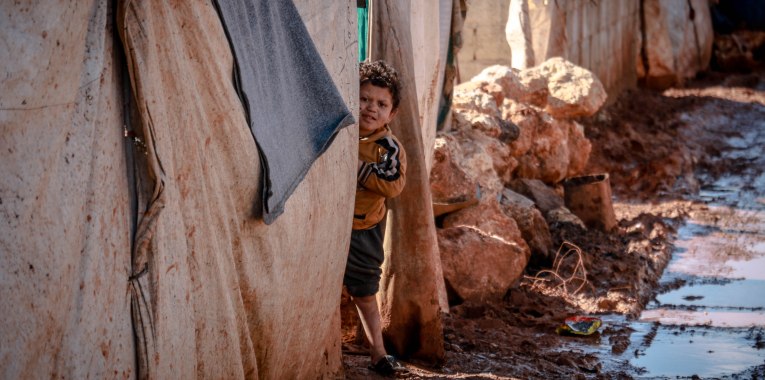
Last week I told you that I would be pursuing three different occasional series through the beginning of this year. The first I introduced you to was a walkthrough the prophetic record of Amos. The third will be focused on managing the resources God has put within our sphere of influence well. Today, I want to introduce you to the second one. For the next several weeks, we are going to be taking a look at several different places in the Scriptures to get a better sense of God’s heart for the weak, vulnerable, oppressed, and rejected members of society. These folks come in many different forms, but every culture has them. Very often they are the ones who weren’t born there, but have arrived later in life for a variety of reasons. We are going to examine several passages throughout the Scriptures that help us better understand God’s passion for them. For this first part, we are going to look at the passage that ultimately grounds God’s compassion and love for all people. We’ve seen this one before, of course, but never from quite this angle. Let’s take a look.




 The Nexus