
“For all have sinned, and fall short of the glory of God.” (CSB – Read the chapter)
Have you ever been late to the party? Usually when that happens you try to slink stealthily into the back and gradually blend into the conversations that are already happening so your belated appearance isn’t quite so painfully obvious as it could be. Today I’m arriving a little late to the party. I have just a couple of comments on a song that is almost 12 years old, was a smash hit when it was released, and has remained remarkably popular as an anthem for the season we are in. I’m late to the party because, honestly, other than hearing it everywhere, I never paid the long the least bit of attention in its first decade-plus of existence. But a recent performance of it on America’s Got Talent brought it freshly to mind. Let’s talk for just a minute today about Lady Gaga’s quadruple Platinum anthem, Born This Way.
Over the course of her incredibly successful career, I have tended to give Lady Gaga (whose real name is Stefani Germanotta) about as little attention as I can. I’ve never been a huge fan of pop music, and her often vocal embrace of political and cultural positions with which I disagree rather strongly succeeded in convincing me to mostly just ignore her. That being said, she is undeniably a very talented singer with a knack for reading the cultural tea leaves and responding in such a way as to keep herself at the center of attention.
I vaguely remember when the song, Born This Way, first released. I didn’t pay it much attention then. I never listened to a recording of it closely enough to actually discern its lyrics. It was just more noise in the general din our culture seems to be constantly creating these days. I was too busy being a husband, a father to little boys, and pastoring a church to care.
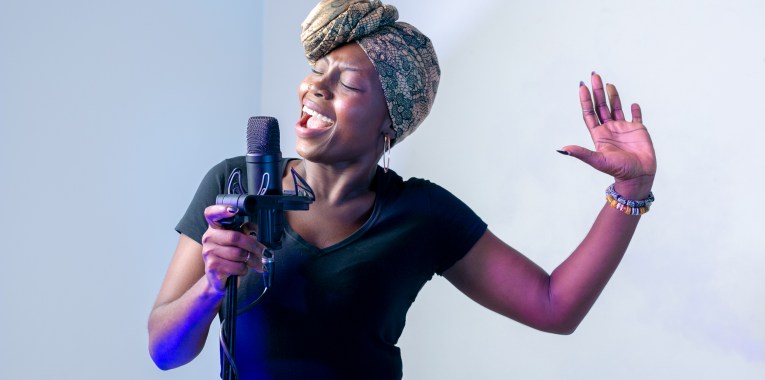
The most recent episode of America’s Got Talent, though, brought the song to my attention in a way it had never been before. The song was performed by an adorable six-year-old girl named Zoe Erianna. She was just as cute as she could be. And her performance was delightful. She had obviously been well-coached on how to move. As she sang the chorus, she waggled her finger back and forth at the audience who simply ate it up. As so often happens with young kids who are even remotely talented, she quickly received four yeses from the judges and will appear in the live shows later this summer.
What so captured my attention, though, was not her performance itself. It was the fact that with the closed captions turned on, I actually “heard” the lyrics to the song for the first time ever. As I did, I marveled at two different things. The first was just how profoundly ahead of the curve Lady Gaga was with the song itself. This song truly was an anthem for its day. More than that, it was and has remained an anthem for the LGBT movement. The rallying cry of that movement has long been that its members are simply being who they truly are and should be accepted as such. This song gave voice to their cries in a way no other song has really accomplished. Others have hinted around the same ideas, but Born This Way makes their claim direct and clear. More even than that, it wraps the whole cry for acceptance in a garb of explicitly Christian imagery and language. It is not simply that folks in the movement were born the way they are, but that God made them like they are. And, because God makes no mistakes, the rest of the world simply needs to fall in line accept them for who they claim to be.
The second thing that grabbed my attention is how, for a song wrapped so intentionally in Christian imagery, how profoundly it fails to apprehend the heart of the Gospel it claims as its mantra. It succeeds rather wildly in grasping the grace part of the Gospel, yet it does so entirely at the expense of the truth. Grace and truth must be paired together, or we will utterly miss our Gospel target. More to the point, the song completely disregards any notion of original sin or the fact that how we are born is not necessarily an indication of who we are to be. It leaves members of the movement trapped in an identity that is (according to many of them) genetically predetermined. In other words, no person can be more than their genes allow them to be. She shouts loudly and proudly about being born a certain way, but what about people who genuinely have no desire to be stuck with the limitations of the feelings that were supposedly packaged with them at their birth?
Furthermore, if this line of reasoning is even remotely correct, then it should be able to be applied to other areas and behaviors. In spite of our culture’s efforts to erase all taboos when it comes to our sexuality, there are nonetheless some behaviors we consider off limits. Take incest for example. Yet if the message of Born This Way applies to someone who is experiencing same-sex attraction of some kind, by what logic would we not apply it to someone who is sexually attracted to a close family member? Cultural mores keep us from embracing such a thing, but what if those change? Should we give cultural approval to the alcoholism of someone whose family history with it has left them genetically predisposed to it? What if some is born with an inclination toward violent behavior? Are they simply born that way, and we should accept them?
If an argument like this cannot be applied evenly to other areas, then it is a bad argument. It is logically fatally flawed. It is advocating for something that will not ultimately be for the good of those who embrace it. It may have had a brilliant set of tailors, but the thread is all invisible and the Emperor has on no clothes.
Rather than attempting to apprehend Gospel concepts for ideas they were never designed to support, we would be better served to embrace the Gospel as it actually exists. It assumes from the outset that how we were born is not the way we should be. We are all born as sinners. We want things we should not want. That is natural. The hope we have, though, is that our loving and faithful God was not content to leave us in our brokenness. He sent His Son to pay the price for our sins so that if we place our trust in Him, we can be freed from how we were born and enabled to reflect His image more fully and truly.
The culture in telling us there is nothing wrong us with is much easier to embrace than the Gospel that assures us we are in fact broken by sin. But the culture offers us no hope and no means of salvation. We are stuck in the mess of our birth and all we can do is embrace it while insisting everyone around us does the same. The Gospel, on the other hand, offers us a pathway to becoming more than that. We can become who God designed us to be. Getting there will mean saying no to what we want in favor of what He wants, but life will be the result. If life is what you want, the Gospel is the way to go. Don’t settle for being merely how you were born. Receive the grace of Christ and become more.
 The Nexus