
“Then Samuel said: ‘Does the Lord take pleasure in burnt offerings and sacrifices as much as in obeying the Lord? Look: to obey is better than sacrifice, to pay attention is better than the fat of rams.'” (CSB – Read the chapter)
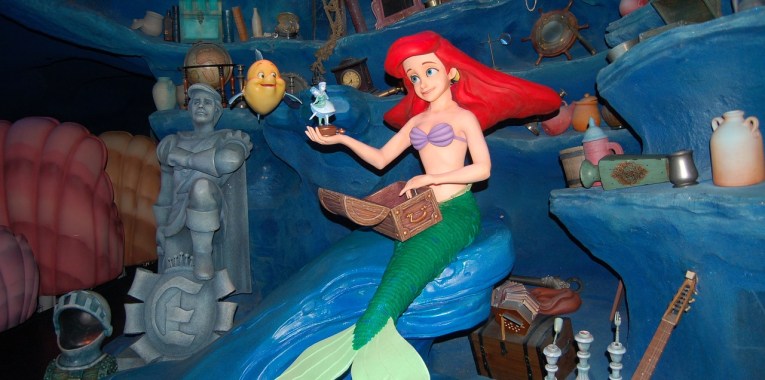
Some stories are just classic. And, if we’re being honest, culturally speaking, most of those stories are owned by Disney. Some of the all-time classic children’s stories have been immortalized in a certain form by a Disney animated film. This doesn’t mean the Disney version is true to the original source material for the story. It often is not. But for several generations, Disney hired the best storytellers and animators and created a cultural narrative around their versions (especially the various princesses from the fairytales they brought to life…never the princes though…I wonder how different our culture would be if Disney had poured as much effort into telling boys to be princes as they have telling girls they are all princesses) that resulted in their versions becoming the ones everybody knows. Snow White, Cinderella, and Sleeping Beauty were the original trio. Since then, many more have been added including the latest to get the live-action treatment and which recently launched on Disney+, The Little Mermaid. Let’s talk today about The Little Mermaid and why the real story is not the one you think it is.
Perhaps the one thing The Little Mermaid does not need is a plot synopsis. I can’t imagine you haven’t seen at least the original animated film. The live-action version sticks pretty closely to the original script, although with a few changes. They added a couple of new songs from Lin Manuel Miranda who is now apparently the only songwriter Disney uses anymore. That’s not necessarily a bad thing as he’s great, but he’s still the only one they’ve been using for a while. They also changed the ending some to make Ariel the one who saves the day rather than being saved by Eric’s seafaring heroics. They couldn’t possibly send the message that a woman actually needs a man to save her.
As far as the movie itself goes, it certainly made a lot of money. While it may not have been quite as successful as previous Disney live-action remakes, it was the 6th highest grossing film this year. The acting was really pretty good for the most part. Halle Bailey really captured the delightfully clueless wonder of Ariel when she was first on land and truly learning about the surface world. Jonah Hauer-King was good as Prince Eric, but was never more than an extra in most scenes. Javier Bardem wasn’t nearly as good as King Triton as he was playing Captain Salazar in the most recent Pirates of the Caribbean movie. It was Melissa McCarthy, though, who absolutely stole the show as Ursula. Additionally, the cinematography and special effects were all pretty good. The technology to produce underwater scenes has developed to the point they look much more real than they used to. The final CGI monster Ursula was silly looking, but that was about it.
If this was such a close approximation of the original animated film, though, why talk about it. Because watching it again in live action got my mind going around the Gospel implications of the story. Let me get to those this way. When the people of Israel finally had enough of corrupt judges and their even more corrupt children leading their nation, they demanded a king as their leader. Samuel, who was serving as a judge at the time, good this rather well considering the request was essentially a rejection of his leadership. God made clear to Samuel that it was really a rejection of His leadership but that He would give the people what they wanted. This took the form of Israel’s first king, Saul. Saul was the king Israel wanted. He was just not the king they needed.
Although Saul’s reign started with a bang, he quickly ran off the rails and started doing things his own way instead of following God’s instructions. He was king, after all. He was the highest authority in the land. Surely he of all people had the authority to decide what was best and pursue it. God wasn’t thrilled with this and told him so through Samuel. Things finally came to a head in 1 Samuel 15 when Saul had been given explicit instructions for how his campaign against the Amalekites was supposed to go, but then equally explicitly disobeyed these instructions. When Samuel arrived at the victory party, he tried to justify his actions, but Samuel was having none of it. He made abundantly clear that God wasn’t interested in sacrifices and offerings. He wanted obedience. He still does.
That is one of those rules of reality that we like the least. If God is God, and if we are not, then we owe Him our faithful and humble obedience. Any other path we might think to take through this life isn’t okay. It won’t lead to life and flourishing. It will only lead to pain and frustration and, ultimately, death. Nothing good will ever come of disobeying our heavenly Father.
Like I said, though, our culture doesn’t like that particular narrative. At all. It runs completely antithetically to our sinful desire to be fully autonomous and in control of our own lives and narratives. We want what we want, and we don’t want there to be any consequences for our getting it.
Enter The Little Mermaid.
If someone was going to set out to create a story to sell this worldly narrative of self-realization and fulfillment as the good and noble end of all our efforts that runs so totally counter to the Gospel narrative, they would be hard-pressed to do a better job than Disney’s The Little Mermaid. The story is about a little girl who openly and brazenly defies her father’s clearly expressed instructions, pays basically no consequence for it, and everybody lives happily ever after in the end. If you think about it, the real villain of the story is not Ursula. She may be all purple and sinister-looking, but all she was really guilty of was trying to use Ariel to get at her brother. Had King Triton not been such a racist jerk about the surface-dwelling population and let Ariel have what she wanted in the first place, none of this trouble would have happened. And, in the end, he finally does do the “right” thing and uses his magic to give Ariel legs instead of a fin so she can be with her one true love.
It’s such a sweet, happy, ending…and it a total rejection of the Gospel. According to The Little Mermaid, God is the villain of the story. I doubt Satan himself could have come up with a better narrative to dupe people into believing as much. God doesn’t have any really good reasons for commanding us not to do the things He has forbidden us from doing. His standing in the way of our getting what we want doesn’t prevent trouble, it causes it. If He would just get out of our way and let us be our true selves rather than restraining us all the time by His character, the world would be a much better place.
It sounds great. At least it sounds great until the rubber of theory meets the road of reality and the whole thing smashes to pieces. God really is good. He really is wise. He really does know better than we do. His character really does set the boundaries of reality. We really don’t do what is right and true on our own. We don’t know what’s best for ourselves. We are selfish and petty. We put ourselves first and treat others around us as nothing more than means to an end. When we insist on our own way, we make a mess of things every single time.
The Little Mermaid may be a fun story, but it is about the worst story you could ever expose your children to, especially your little girls. If they really want to have the story, give them the original in which The Little Mermaid defies her father’s wishes and things turn out terribly. She’s miserable and the only way out of it is to murder her new husband and become a mermaid once again. She opts instead to kill herself rather than her love. The end. It’s really a story about the folly of disobeying parents and of the goodness of humanity versus non-human creatures. That’s a better story. More than that, it’s a truer story. And truer stories are always better than false ones. Doing life God’s way is always better than taking our own path. Watch The Little Mermaid, but if you watch it with your kids, be prepared to do some worldview intervening as you do.
 The Nexus