

So at evening quail came and covered the camp. In the morning there was a layer of dew all around the camp. When the layer of dew evaporated, there were fine flakes on the desert surface, as fine as frost on the ground. When the Israelites saw it, they asked one another, ‘What is it?’ because they didn’t know what it was. Moses told them, ‘It is the bread the Lord has given you to eat. This is what the Lord has commanded: “Gather as much of it as each person needs to eat. You may take two quarts per individual, according to the number of people each of you has in his tent.”‘” (CSB – Read the chapter)
Have you ever seen or experienced something that went beyond your ability to describe it? We did a fire in our fire pit the other night. Over the last several months we had collected a ton of sticks and small limbs from around our yard and burned all of them. It didn’t take long because they were so dry. By the time we were finished, there was an incredible base of glowing embers in the bottom of the pit. At one point, I spread it all out, and the entire bottom of our fire pit was covered by them. They were all glowing with different shades of orange and red that were constantly swirling and changing. It was amazing to look at. I don’t have words to fully describe what it looked like. The first morning after God announced the provision of manna for Israel, the people walked out and found it there. What we have here is their attempt to describe it. Let’s talk about what we see.
Let’s start with the quail. This is the one part of this whole episode that can be explained naturally. It was common then to see humongous flocks of quail making their way across the desert. They would basically be driven by the winds in this direction or that. In this instance, the wind happened to blow this particular flock so that it arrived among the people that very evening. Easy natural explanation. Of course, when you start to think about it, you realize just how miraculous of a thing this really was. While extraordinarily uncommon events happen all the time, when something like this happens at the precise time someone said it would happen, the sheer weight of the odds against something like this happening start to push pretty insistently in the direction of the miraculous.
There just happened to be a flock of quail large enough to feed the people in the region. That’s not so terribly unexpected. But we don’t know where this flock got started. How far away from the people was it? And there just happened to be a wind of the right speed and in the right direction that the birds, which would have already developed a good sense of avoiding predators…like humans…happened to land among a gigantic group of people. So, for the natural explanation to hold, this gathering of birds and the atmospheric conditions just happened to come together for this flock to arrive among the people precisely when God told Moses to tell the people that it would arrive. That’s a lot of factors over which Moses had zero control to come together like this. The natural explanation starts to look pretty silly here.
Somewhat interestingly, we’re not told how the people reacted to the quail. Were they grateful? Were the entitled in their attitude? Mostly indifferent? Among a people who were hungry and stuck in the desert, I have to imagine there was a fair bit of excitement bubbling among them, but we don’t know. But when they walked out of their tents the next morning, whatever excitement they had was replaced with confusion. I suspect some folks were early risers and some were not. Some saw the dew. Perhaps it looked a little different from normal. As the sun crested the horizon, though, and the dew quickly began to burn off as it did in the desert, at first their eyes seemed to be deceiving them. The dew was gone, but it wasn’t. There was something left. “There were fine flakes on the desert surface, as fine as frost on the ground.”
The Israelites had never seen anything like this before. No one had. This was something new God had done just for them. And they didn’t know what to make of it. In fact, the word “manna” that came to be its name comes out of the Hebrew expression of utter confusion on their lips here. “What is it?” And I love the fact that Moses makes sure to include the little editorial note here that they asked what it was “because they didn’t know what it was.” Yes, thank you for that, Captain Obvious.
Moses went on to explain further that this was the bread God had given them to eat. The interesting thing about this is that it wasn’t bread. At all. It was flaking wafers that we are later told resembled coriander seed. I don’t know about you, but this doesn’t look much like bread to me.
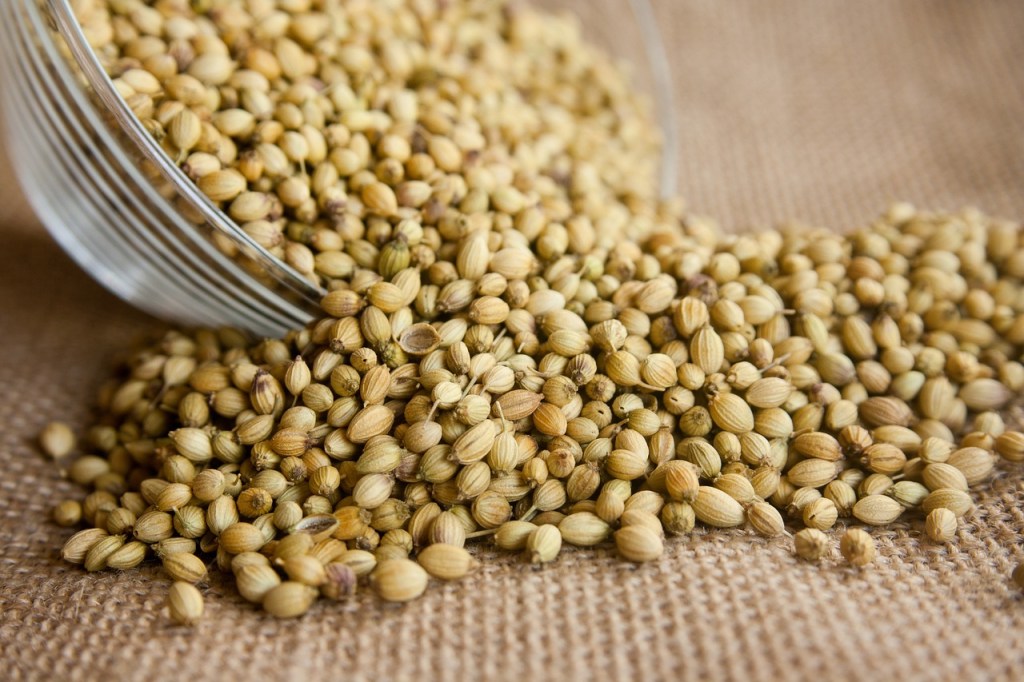
The Hebrew word Moses uses here can be translated bread, but it is also a generic word for food. Bread was such a staple in their diet that the words “bread” and “food” were interchangeable for them. The people were able to grind it up and bake it, though, so perhaps that’s how it became known as bread. Of course, they were also able to boil it which cuts against that image. The basic point is that just like them, we don’t know what it was.
Moses goes on to tell them they are to gather each day what each member of their families needed to eat. Actually, he says two things that seem to be contradictory here. He tells them to gather as much as each person needs to eat, and then goes on to tell them how much that is (namely, two quarts). My first reaction is to wonder what the person who needed more than two quarts was supposed to do. We are never told or led to believe that this manna was their only source of food in the wilderness. This was their primary staple, but it was likely intended to be supplemented by their other food stores. It could also be eaten either cooked or raw, and cooked in multiple different ways. This meant that the people were not stuck eating the same thing every single day for forty years. God’s provision for them was both gracious and good.
Now, as far as we are concerned, what we are seeing here is mostly just details that enrich the story and give us a better picture of how God provided for His people. In this more filled-out picture, though, we are reminded that when God provides, He doesn’t just do the bare minimum. He goes above and beyond to make sure we have more than enough. He doesn’t just give us gifts that are purely utilitarian in their shape and scope. He gives us good things for us to enjoy. If He has provided something for you (and, just so we’re clear, He has provided everything for you), He has provided that for you for you to be able to enjoy it. He wants you to like what He gives. He gives good things for that reason. Of course, through the lens of Christ, we understand that the best way to enjoy them is to use them to bless others in some capacity just like Jesus leveraged all of His resources for our benefit. So then, how can you express your gratitude for what God has given you today by using it to bless another person? Be creative just like He was in the giving. The more you put into this, the more you’ll get out of it. When we live after the pattern of God’s character, things will always go better for us than not.
 The Nexus