
“Don’t say, “Why were the former days better than these?” since it is not wise of you to ask this.” (CSB – Read the chapter)
I get a variety of daily newsletters in my email inbox. Some are just collections of headlines with links to read the full articles. Others include all the news right there. Because I don’t watch any news on TV or subscribe to any newspapers or get any news through social media, these newsletters along with a handful of podcasts are my way of staying engaged with what’s going on in the world around me. The best newsletters, though, don’t just give the news. They also include a variety of other items the writers think might be of interest to their readers. One of these caught my eye the other day. It was a synopsis of an article about a group who tried to figure out exactly when the “good old days” actually were. If you’ve ever wondered that yourself, read on with me for just a bit.
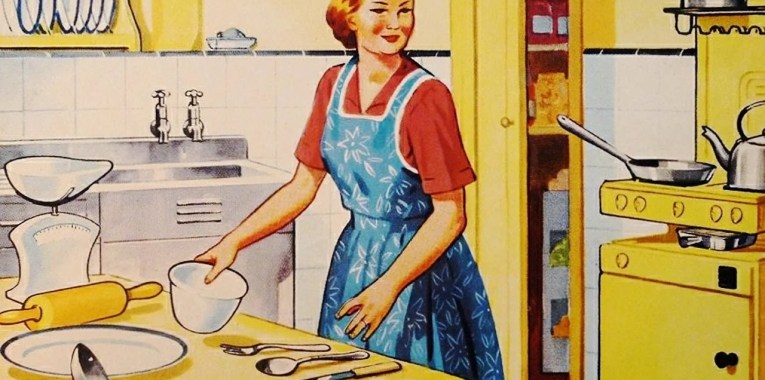
Have you ever longed for the good old days? Most of us have at least flirted with nostalgia at least once in our lives. Nostalgia is actually one of the gods our culture quietly worships more than just about any other. It is a seductive god too. Nostalgia promises us relief from whatever is troubling us by taking us back to a time when things were better than they are now. And who doesn’t want to go back to a time when things were simpler, the world was safer, and all the problems we had could be solved in about 30 minutes, ending with a nice family meal?
Nostalgia is not only capable of transporting us to a better time in the past, it has the ability to turn quite a profit in the present. To put that another way, nostalgia sells. Cracker Barrel restaurants don’t primarily sell food, they sell nostalgia with a meal on the side. Hallmark movies, especially during the holiday season, are loaded with it. Small towns across the country like mine that have managed to maintain a quaint feeling without dying are growing quickly as families try to get back something they feel like they’ve lost.
So then, when exactly were the “good old days”? Most of America has been trained to think of them as happening sometime in the 1950s. A recent poll conducted by YouGov, though, found otherwise. They survey 2,000 adults across the country, asking them a variety of questions related to when things were the best for the nation. The results were really interesting. When pressed, Americans don’t associate a better time in the past with a certain decade. They associate it with a certain season in their own lives. The good old days weren’t in the 1950s after all. They were during about a 10-year period in your childhood from about ages 5-15.
That’s when your parents knew everything, the weight of bad news from around the world didn’t weigh very heavily on your shoulders, athletes and music were good and exciting, your community was close-knit, families were safe and loving, the culture was the most morally straight, and everyone still mostly told the truth.
Now, was the world really like this then? If you ask someone who was an adult during that period they would almost certainly tell you it was not, and would point further back in the nation’s history as the proper location of that time when things were really good. Most likely, they would point back to the period that just happens to coincide with their own childhood. Why? Because things were just better when we were kids. They were better when we didn’t have to get up and adult every day. They were better when we had many fewer worries and burdens to carry than we do now. They were better when we could forgive more easily because our pain hadn’t yet had time to calcify in our hearts. They were better when we could trust with simple faith because we hadn’t yet gotten jaded. Perhaps there’s a reason Jesus said that unless we are willing to adopt the faith of a child we won’t ever manage to get into the kingdom of heaven.
And yet, as true as all of this might be, I think there’s a danger here as well. It is a danger that Solomon, the wisest man who ever lived, warned us about in the most world-weary and realistic collection of wisdom in the Scriptures. He didn’t go into any detail beyond this, but in Ecclesiastes 7:10 he said, “Don’t say, ‘Why were the former days better than these?’ since it is not wise of you to ask this.”
Now, why do you think that would be? There are perhaps many reasons for this, but let me give you just one to chew on today. The more and harder we pine for some mythical time in our past when things were better, the less satisfied we will be with our present. This, you see, is the payment nostalgia demands for its services. Nostalgia will indeed transport you to the past to a time when things seemed better, but it will do this only for the fee of your contentment in the present. The more we reach and yearn for the “good old days,” the less content we will be with now. That’s a trap from which it is hard to escape, and getting stuck in it will make us miserable and unbearable to be around for the people around us who actually have to live with us today.
Many folks had a good childhood. I certainly did. Those years from 5-15 were some of the best in my life. Even if you didn’t have a very good childhood, but for extreme circumstances, the burdens of adulthood are heavier than the burdens of childhood, and it is easy to find ourselves wishing to trade one for the other. But again, this is a trap, and if we fall into it, we risk missing out on the best times of our present.
If I were to spend all my time wishing for or trying to recreate times in my past that really were good, I would miss out on getting to fully enjoy the amazing wife, terrific children, great job, good friends, and fantastic community I have now. I could make that trade, but it ultimately wouldn’t be a good one. The better path is to embrace a spirit of gratitude in and for every season we are in as we are in it. When we are always grateful and looking for reasons for gratitude, things will always be the best they can be. That doesn’t mean they will always be good. We will still go through seasons that are hard and even bad both because of our choices and the choices of the people around us. But when our primary lens is one of gratitude and not the lens of discontentment nostalgia ultimately leaves us with, we will always be able to see the good in our present which will make us happier and more pleasant to be around for everyone else.
So then, what do you have to be grateful for in your current season? Make a list. Then, add to that list every single day. Find something new each and every day to be thankful for. As you do this, you will gradually develop the discipline of gratitude and it will become easier to do. It will eventually become an automatic habit. When that happens, you won’t need the good old days to feel better about your life. You’ll be grateful for everything and everyone you have now.
 The Nexus
I agree with your conclusion! Somewhat ironically though I use nostalgia a bit differently in managing my own mental and emotional state, and addressing others who languish in lament for the current state of our existence. I use nostalgia to remember and remind others of challenges in every day of history that much of the time were arguably far greater than any we face today, especially in relative terms.
LikeLiked by 1 person
True statement. While we memorialize the past, it was often vastly more difficult and uglier of a time than the present. With a lens of gratitude in place, we could more easily see that.
LikeLike
The older I get the more dreams I have where my parents and grandmother were still alive. Those dreams bring back old memories, I often wake up smiling. But I would not trade my childhood for my life now. So fortunate to have a wonderful family, a home, transportation, a job I like, great church (and pastor), etc. Very blessed and looking forward to retirement. Thanks for continuing your blog on the road. 😎
LikeLiked by 1 person
Amen to that, and glad for it.
LikeLike