
“One person judges one day to be more important than another day. Someone else judges every day to be the same. Let each one be fully convinced in his own mind. Whoever observes the day, observes it for the honor of the Lord. Whoever eats, eats for the Lord, since he gives thanks to God; and whoever does not eat, it is for the Lord that he does not eat it, and he gives thanks to God. For none of us lives for himself, and no one dies for himself. If we live, we live for the Lord; and if we die, we die for the Lord. Therefore, whether we live or die, we belong to the Lord. Christ died and returned to life for this: that he might be Lord over both the dead and the living.” (CSB – Read the chapter)
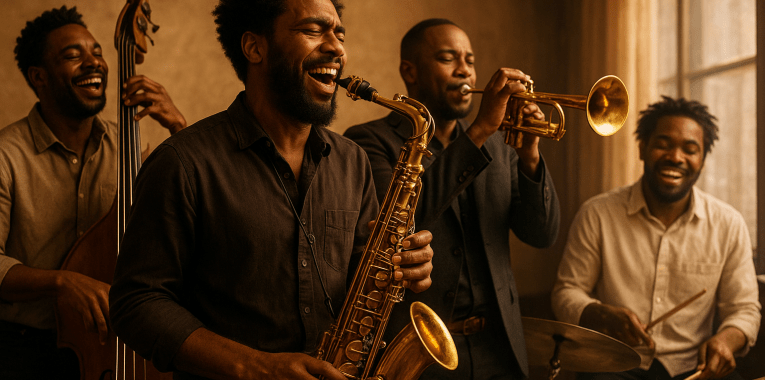
When I was in high school, I got to play in the jazz band. We met before school at 6:45 two days a week. I loved it. More than just that, I learned to love jazz as a musical style. Jazz is all about improvisation. It’s about having the freedom to explore and create. There are almost endless possibilities and varieties open and available to players. I say almost endless because there are some boundaries, and the greatest freedom comes to those musicians who have spent the most time learning where those boundaries are through years and years of discipline and practice. But within those boundaries, there really is room to thrive. In a world that operates like it’s playing a fugue, the church offers jazz to those interested in something truly free. As Paul continues exploring the freedom we have in Christ, let’s talk about it.
Having established the nature of the problem of judgmentalism within the church in Rome, as well as the guiding principle for approaching it, Paul now dives into the concept of our freedom in Christ in more detail. The principle of freedom in Christ is pretty amazing, but it’s also pretty challenging. It’s challenging because freedom itself is a challenging thing. It’s a great theory, but claiming it, and even more so, sustaining it is much more difficult than it seems like it should be.
It seems like once people are given the gift of freedom that they will take that freedom and simply enjoy it. And in a sinless world, that would be possible. But that’s not the world we have. We live in a world filled with and broken by sin. We are filled with and broken by sin. Even those who are in Christ still have the lingering effects of their sinful nature that they must constantly battle against with the Spirit’s help. And I say “with the Spirit’s help” there because if we try to battle against it on our own, we will fail. We do every time.
The problem of sin when it comes to freedom is that it causes us to do things that impinge on our neighbors’ ability to enjoy their freedom. Our neighbors naturally don’t appreciate this and will respond by seeking to limit our ability to enjoy our freedom either by personal action against us, or by rallying the society around them to make certain actions illegal such that doing them automatically triggers a restriction of the freedom of the one who is guilty. In this way, freedom is not sustainable without virtue. But virtue doesn’t come from within us, again because of sin. Virtue is only sustained with the inside help of a worldview that explicitly condones and directs it and the outside help of a good God who empowers us to achieve it.
I say all of that to say this: What Paul describes next here is an idealized description of what it looks like when members of the body of Christ are righteously enjoying their freedom in Christ together. In other words, it is very easy to find exceptions and whatabouts that will allow us to completely pick apart what Paul is saying here. We must resist the temptation to do that because Paul is only imagining things as they should be and calling us to that.
“One person judges one day to be more important than another Someone else judges every day to be the same. Let each one be fully convinced in his own mind.” Here we have a situation in which there are two different opinions on the nature of time. Contextually speaking, Jewish background believers judged the day of the Sabbath to be more important than others. Gentile background believers, on the other hand, had no such commitments as part of their cultural background. No doubt that was another source of conflict and division in the church.
Which one was right? Paul doesn’t say. Given what he already expressed about the morality of eating meat obtained through pagan sacrifice (namely, that those who believed it improper to eat were weaker in their faith than those who understood it to be fine), I suspect Paul would side in favor of those who believed every day to be the same. Paul always leaned in the direction of a more expansive embrace of our freedom in Christ, and believing every day to be the same allows for more freedom than the restriction of one day’s being more special than the others. If you believe one day to be more special than any other you will either be granted more freedom on that day or else less freedom on the other days. Or, equally problematically, the reverse could be true. Either way, special days restrict our overall freedom in Christ.
That being said, Paul’s conclusion is that we should “let each one be fully convinced in his own mind.” In other words, whichever position a person holds on that question, let them hold it and live consistently in light of it. Whether or not a person gives greater attention to one day or treats every day the same doesn’t necessarily have any impact at all on our standing before God in Christ. You can take either position and still honor Jesus as Lord. Because of that, if we happen to have committed ourselves to one or the other, we are in no position to judge someone who has taken up the other position. The reason for that is what we talked about yesterday. They are God’s servant; not ours.
As long as they are seeking to honor Jesus as Lord, they are on firm footing. They are on firm footing even if a different approach could allow them more freedom. Like Jesus does, we are to receive them where they are and point them forward from there. Eventually they will receive and enter into the fullness of the freedom available to them. It’s not our job to force them to that place before they are ready for it. Our job is only to love them like Jesus does.
“Whoever observes the day, observes it for the honor of the Lord. Whoever eats, eats for the Lord, since he gives thanks to God; and whoever does not eat, it is for the Lord that he does not eat it, and he gives thanks to God.”
Within the kingdom of God there is a great and wide ability for us to honor Him as Lord. There is incredible variety and diversity. This is all by design. And indeed, we see this kind of diversity in the church today. I don’t necessarily mean that we see it in the churches in a given region—although there is more diversity in a given region than you might expect. We see it in the great and grand diversity of the churches scattered all over the face of the earth. There are all kinds of different worship styles—different service orders, different music, different ways to pray, different type of preaching, different types of gathering spaces, different ways to exist in the community as integrated parts of it—being in but not of, different ways to serve the community, different ways to love our neighbors with the love of Christ, and so on and so forth. All of this of to the glory of God.
This diversity within a broad set of boundaries that keeps everybody playing the same song is intentional on God’s part. His greatness is so vast and complete that we could spend our entire lives finding different ways to bring Him glory and never run out of varieties. We could spend multiple lifetimes and still not exhaust the possibilities. Life in God’s kingdom is like living in a great jazz tune. The song is defined by boundaries that are clear and firm. There’s only one melody, one set of chord changes. But as long as you are within those boundaries, not even the sky is the limit.
The reason for all of this is that our lives belong to the Lord. Every single part of them. As long as we are living to His glory, we can live however we please. (Allow me to remind you of the contextual restraints I put in this conversation back toward the beginning.) “For none of us lives for himself, and no one dies for himself. If we live, we live for the Lord; and if we die, we die for the Lord. Therefore, whether we live or die, we belong to the Lord.”
When Jesus came and lived and died and rose, He did not do that to redeem only part of creation. He did not come to redeem only part of our lives. He came for the whole thing. In His life He ruled over life. With His death and resurrection He added death to His area of sovereignty. “Christ died and returned to life for this: that he might be Lord over both the dead and the living.”
Christ is Lord of all of creation. As the Dutch Prime Minister and theologian Abraham Kuyper said, “There is not a square inch in the whole domain of our human existence over which Christ, who is Sovereign over all, does not cry, ‘Mine!'” As long as we live in recognition of that, the full breadth of the territory available to us is beyond our ability to fully imagine or comprehend it. That doesn’t mean we have to live with all of it in order to be fully faithful to Him. We can stay in but a single corner if we please. But as long as we are within the broad boundaries of Christ’s lordship—and again, because He is the Lord of all creation those boundaries are very broad indeed—we will never exhaust the possibilities for bringing Him honor and glory.
Our challenge here and now is to live in light of that in the church and with respect to our fellow brothers and sisters in Christ. They may not look and think and act just like us, but if they are seeking to honor Him with their lives, we can receive their efforts with graciousness and generosity of spirit. We can love them freely with the love of Jesus and let their heavenly Father (and ours!) sort out how well they are doing. Now, if they are crossing a line into sin and ceasing to honor Christ the Lord alone as holy, then we have a duty to gently and lovingly call them back within the kingdom’s boundaries, but that will have to be a conversation for another time. For now, let us lean into love and glorifying Christ together. That’s what we were made for.
 The Nexus