
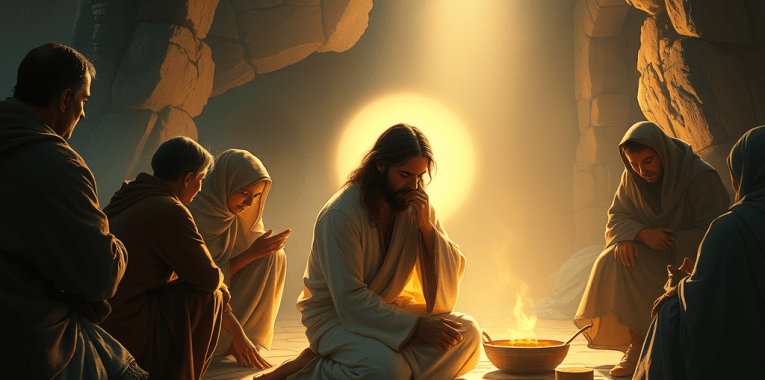
“Adopt the same attitude as that of Christ Jesus, who, existing in the form of God, did not consider equality with God as something to be exploited. Instead he emptied himself by assuming the form of a servant, taking on the likeness of humanity. And when he had come as a man, he humbled himself by becoming obedient to the point of death—even to death on a cross.” (CSB – Read the chapter)
Jesus was God. Like, the God who created everything. Paul spells out some of that in the opening verses of his letter to the Colossian believers. He was and is worthy of all the honor and glory simply by virtue of being God. When He came, He could have come in glory and luxury. He could have demanded comfort and ease. He didn’t have to experience any inconvenience or discomfort. Yet that’s not what He did. That’s not how He came. Today and tomorrow, let’s examine the most important presentation of the humility of Jesus ever written.
Remember that Paul is offering counsel for how we can successfully stand firm in our faith in the face of various pushback and persecution. The secret is found in humility. The first part of his Spirit-directed advice is that we need community for humility to work properly. There is no being humble apart from the church because there’s no one to practice humility with. If you aren’t connected to a local body of Christ, you aren’t going to grow in humility, which means you aren’t going to stand firm when it faith is challenged; you’ll fold.
As we move forward, we find Paul pointing us to the second and more important secret of humility: Jesus. Real humility isn’t possible without Jesus. Being humble isn’t something we manage on our own. This is because of the brokenness of sin in us and the ubiquity of pride in our thinking and reasoning processes. Indeed, the very thought that we can be humble on our own instead of embracing humility as a reflection of our Lord’s example, meaning that we don’t need God in order reproduce His character in our lives, we have embraced pride and genuine humility is not going to be possible at all for us.
In our efforts to achieve the kind of community we talked about yesterday that can be properly supportive of our efforts to stand firm in our faith when the fires of life get turned up on us, our only hope of success lies in adopting “the same attitude as that of Christ Jesus.” Jesus is our ultimate, and really, only, positive example of humility. Jesus was perfectly clear-eyed about who He was as God and what that meant for how He needed to live His life on earth. Paul here walks us through this first by describing the humility itself, and then the payoff. We’ll talk about that second part tomorrow. He describes this with what may have been an early Christian hymn, meaning Paul didn’t necessarily make this up himself, but was citing already established Christian doctrine.
So then, what was it that made Jesus so humble? It started with an honest acknowledgment of who He was. “Existing in the form of God.” This is just Paul’s way of saying that Jesus was God. He was not of some different substance but managed to get close enough to be counted practically there. Jesus was God incarnate. Jesus is God the Son, the second member of the Trinity. That’s fundamentally who He is. As a man walking around in the flesh, He was also the God who created and sustained the universe. It was the ultimate, cosmic both-and.
But in spite of that, “he did not consider equality with God something to be exploited.” If there was any doubt Paul was equating Jesus, God the Son, with God the Father in that first statement, this should remove it. The parallelism here indicates what Paul was really saying the whole time. When Jesus came as a man, His purpose was live as one who was fully human. This meant He couldn’t ever hit the “God button” when things got hard. He never used His divine abilities for His own benefit. It was only and ever for the sake of others or for the purpose of advancing God’s kingdom that He worked miracles. His convenience never factored into the equation. Humility is fundamentally concerned with honesty, but it always takes the form of being others-focused. It looks constantly to do what is good for someone else even if that comes at the expense of our momentary good because it understands well (i.e., is honest about) that interruptions to our temporary good do not come at the expense of our ultimate good.
So then, rather than exploiting His divine abilities and rights as God for His own earthly benefit and convenience, Jesus went the other way. He took this being others-focused to its ultimate end. “Instead he emptied himself by assuming the form of a servant, taking on the likeness of humanity.” That is, God the Son took on flesh and became Jesus the man. We see that same “form of” and “likeness of” language here as well indicating that Jesus fully became a servant of God…of Himself. He was fully God, but also fully man, ready to do the will of His Father in every possible way. As a man He lived in submission to God. That’s our ultimate example.
Unfortunately for Jesus the man in the short term, but fortunately for us in the long term, the end in this world God the Father had planned for Him was a sacrificial one. “And when he had come as a man, he humbled himself by becoming obedient to the point of death—even to death on a cross.” Jesus was willing to be obedient to God’s plans even when that obedience came at a cost; a high cost. He was so willing because He knew what the ultimate outcome would be (which, again, we’ll talk about more tomorrow).
For now, I think this is a point we very much don’t want to miss. Jesus was able to be humble because He saw reality through the lens of its ultimate end. When we know that God’s kingdom is going to be the final form of this world, we can start living now in preparation for how we will live then. When we know that our lives are secure in eternal God’s kingdom regardless of what happens to us in this life, we can live radically for others without worrying about the cost. Yes, it may be high now, but the rewards for our efforts will infinitely outweigh what it takes for us to receive them.
This doesn’t mean we take unnecessary or unwise risks. It means that we can serve others freely, pursuing a path of sacrificial generosity with and toward the people around us, because we know that the God we serve has access to all the resources in the world, is capable of meeting our needs by means we can’t even imagine, and that even if we have to go without in this life, we won’t in the next, and that next life is eternal.
Real humility means serving God and obeying His commands no matter what those commands happen to be. This doesn’t mean that we expect or plan for Him to ask us to do weird or dangerous things. There are plenty of commands for us to keep, already written down in the Scriptures for us, without having to give the first thought to receiving something new. We can simply love our neighbors as ourselves and that will keep us plenty busy. We can work for justice for the oppressed and never run out of things to do in obedience to God’s commands. We can selflessly serve those who are hurting and struggling and stay as active as we desire and then some.
And we can do all of this because Jesus has already paved the way. Indeed, in doing any of this we aren’t doing anything other than what He has already done. He is our example. He is our inspiration. He is the one who enables us to do it. And when we do it, we’ll gain the rewards of obedience. In the ultimate sense, those rewards are eternal life in God’s kingdom. In the more immediate sense, we will create communities together where needs are met and where we can find the encouragement and support to keep on in our pursuit of humility and its natural outworking even when that gets hard. Humility, you see, is always a win-win affair. We win now with a richer more fulfilling life, and we win later with eternal life in God’s kingdom. This really is the way to go. So, let’s take it.
 The Nexus
Jesus became fully man and also remained fully God, yes? God (among other things) is omniscient. While He walked on earth, was Jesus omniscient? Luke states that Jesus grew in wisdom. There’s another question in here somewhere, I’ve just not lit on it. Thanks
LikeLike
Great question! Yes, Jesus was fully human and fully God. He was 100% of both. When Luke talks about Jesus’ growing in wisdom, He is speaking of His humanity. As an infant, for instance, Jesus knew just as much as any other infant does, which is to say, practically nothing. He did not use His divine nature to His advantage even when it would have given Him a pretty profound advantage. He grew in wisdom in the sense that He learned about the world and its workings just like we do. He had a fully human experience.
He was still fully God, though, and we see that through His miracles, but even more so in the various times when He knew what the people around Him were thinking.
The both-and here is challenging to get our minds wrapped all the way around and has been since the earliest days of the church. There were fierce debates about Jesus’ nature in the early church. That was a major part of the reason for the early church councils and the enduring creeds that came out of them. What the early church leaders saw and understood (with the Spirit’s help) is that the New Testament clearly affirms both His total humanity and His total divinity.
Just because we can’t work out all the ways this worked doesn’t mean it’s not true. Sometimes the truth goes beyond our ability to fully understand it. We still trust in the God who reveals it and operate in light of it.
When you remember your other question, ask away! Have a great Friday!
LikeLike