Morning Musing: Exodus 22:25-27

“If you lend silver to my people, to the poor person among you, you must not be like a creditor to him; you must not charge him interest. If you ever take your neighbor’s cloak as collateral, return it to him before sunset. For it is his only covering; it is the clothing for his body. What will he sleep in? And if he cries out to me, I will listen because I am gracious.” (CSB – Read the chapter)

A huge portion of our economy is built on interest. Everybody changes interest for everything. The only reason a business might not charge interest is if they are running a special sale in hopes that enough extra people will buy something to make up for the interest they are losing from a small number buying. The practice of charging interest on loans has been around for a long time. For much of that, though, one group of people in particular considered it a bad thing. This verse has a whole lot to do with why. Let’s think through what we see here, what it means, and what we should do with it today.

Read the rest…
Morning Musing: Exodus 22:22-24

“You must not mistreat any widow or fatherless child. If you do mistreat them, they will no doubt cry to me, and I will certainly hear their cry. My anger will burn, and I will kill you with the sword; then your wives will be widows and your children fatherless.” (CSB – Read the chapter)

How any society treats its most vulnerable members is a reflection of that society’s moral fiber. The Nazi regime, for instance, rounded up their weakest members and systematically eliminated them. Darwin was right that nature tends to operate on the law of the survival of the fittest. The strongest survive and thrive while the weakest get eaten. People and animals, however, are not the same. We are made in God’s image, and are called to reflect that in our interactions with one another. When it came to the question of how Israel was to treat some of their weakest and most vulnerable members, God was pretty clear on what He expected. Let’s explore what He says here and what it might mean for us.

Read the rest…

Digging in Deeper: Exodus 22:21

“You must not exploit a resident alien or oppress him, since you were resident aliens in the land of Egypt.” (CSB – Read the chapter)

Immigration and border security are two of the hottest political topics in our nation right now. The reasons for this are pretty obvious too, especially if you live in a community near the southern border or one of the major cities were thousands of the immigrants who have crossed the border illegally in the last year are being sent. Having an enormous influx of new residents who don’t speak the language, don’t know the culture, don’t have much in the way of means of supporting themselves, and who may likely owe debts to the criminal cartels who facilitated their getting here in the first place is a recipe for a social and economic disaster. How we should solve this problem as a nation is far beyond the scope of what we could possibly tackle here. How we as followers of Jesus should think about and act toward these folks, on the other hand, is a fair bit clearer. Let’s talk about what we see here, and what it reveals about the character of God.

Read the rest…

Digging in Deeper: Exodus 22:18-20

“Do not allow a sorceress to live. Whoever has sexual intercourse with an animal must be put to death. Whoever sacrifices to any gods, except the Lord alone, is to be set apart for destruction.” (CSB – Read the chapter)

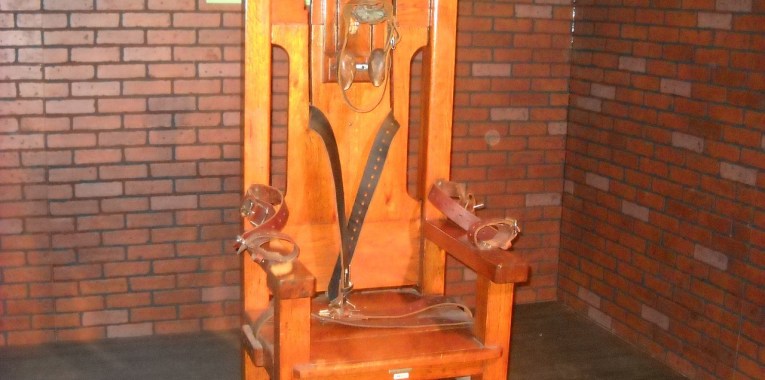
The death penalty debate doesn’t rage quite as hot today as it did in the fairly recent past, but there are nonetheless still pretty strong opinions on both sides of the matter. The fact is, not very many people are put to death for crimes they have committed in this country as compared with where that annual number used to be. There are a number of reasons for this, some of which I personally find to be more compelling than others. In any event, one of the sources of support many death penalty proponents point to in order to justify their position is the Bible. Verses like this are often why. Not everyone, however, agrees. Let’s talk about what we see here and what we are supposed to do with it.

Read the rest…

Contagious Holiness

So, Jesus rose from the dead. What does this mean for us? Let’s reflect on that today with a story about Jesus’ calling the last part anyone ever imagined He would to be His disciple, and the party that happened afterward. Along the way, we’ll get a good reminder about just what our job is now that Jesus is alive.

Contagious Holiness

A story for you this morning. We typically define our world by what we can see. It may not always seem that way today because we spend so much time as a culture thinking about things we can’t see, but for most people in most situations, what we can see has a great deal to do with how we think about and interact with the world around us. Before the invention of the microscope, this was most definitely the case. In the 1860s, most people generally couldn’t imagine a world smaller than what their eyes could perceive. Then a French chemist and microbiologist named Louis Pasteur did some experiments that proved the existence of these tiny creatures called microorganisms that were apparently everywhere. Not only did some of these organisms do helpful things like allowing for the production of bread or cheese, but they were also responsible for less helpful things like spoiling food and making us sick. What scientists soon figured out was that passing these tiny organisms from person to person may be responsible for one person’s illness getting passed to another person. 

Read the rest…