Digging in Deeper: Exodus 10:1-4

“Then the Lord said to Moses, “Go to Pharaoh, for I have hardened his heart and the hearts of his officials so that I may do these miraculous signs of mine among them, and so that you may tell your son and grandson how severely I dealt with the Egyptians and performed miraculous signs among them, and you will know that I am the Lord.” So Moses and Aaron went in to Pharaoh and told him, “This is what the Lord, the God of the Hebrews, says: How long will you refuse to humble yourself before me? Let my people go, that they may worship me. But if you refuse to let my people go, then tomorrow I will bring locusts into your territory.” (CSB – Read the chapter)

C.S. Lewis once wrote that in the end there will only be two kinds of people: those who say to the Lord, “Thy will be done,” and those to whom the Lord will say, “Thy will be done.” It makes for a wonderful and thoughtful bit of prose, but he’s not quite right. His point was that those who finally oppose the Lord will be able to be eternally separated from Him. In other words, their will to be separated will be accomplished. Beyond that, God’s will is what will happen. Pharaoh arrogantly thought he could oppose the Lord’s will and do what He wanted. God wanted him to know that he was going to lose this contest of wills and power. Because he hadn’t listened thus far, God was about to turn up the volume even more.

Read the rest…

Digging in Deeper: Exodus 9:13-18

“Then the Lord said to Moses, ‘Get up early in the morning and present yourself to Pharaoh. Tell him: This is what the Lord, the God of the Hebrews says: Let my people go, so that they may worship me. For this time I am about to send all my plagues against you, your officials, and your people. Then you will know there is no one like me on the whole earth. By now I could have stretched out my hand and struck you and your people with a plague, and you would have been obliterated from the earth. However, I have let you live for this purpose: to show you my power and to make my name known on the whole earth. You are still acting arrogantly against my people by not letting them go. Tomorrow at this time I will rain down the worst hail that has ever occurred in Egypt from the day it was founded until now.'” (CSB – Read the chapter)

We’ve talked about this before, but one of the reputations God has resulting from people’s reading the Bible without understanding is that He is all anger and wrath. He looks for opportunities to judge, and delights in raining down excessive punishment on people for the smallest and silliest things. At a glance, the plagues in general, but especially this seventh plague seems to be a case in point of this. After all, what else are we to call a deadly hailstorm? Yet this plague is set within the longest narrative any of them have so far received, and this narrative paints a very different picture of God than a mere cursory reading reveals. Let’s talk today about God’s character, the judgment for sin, and why you really can’t understand one unless you understand the other.

Read the rest…

Morning Musing: Exodus 9:10-12

“So they took furnace soot and stood before Pharaoh. Moses threw it toward heaven, and it became festering boils on people and animals. The magicians could not stand before Moses because of the boils, for the boils were on the magicians as well as on all the Egyptians. But the Lord hardened Pharaoh’s heart and he did not listen to them, as the Lord had told Moses.” (CSB – Read the chapter)

One of the most challenging aspects of a healthy, orthodox, biblical theology is getting the balance right between God’s sovereignty and human responsibility. The uncomfortable tension the Scriptures consistently hold is that both positions are entirely correct. Making sense out of that, though, isn’t always easy, especially when we encounter passages like this one. Here we are at another plague that is again worse than the last one. But this time, God is implicated by the language for the ongoing tragedy of the plagues. Let’s talk about what’s happening here.

Read the rest…

Digging in Deeper: Exodus 9:1-4

“Then the Lord said to Moses, ‘Go in to Pharaoh and say to him: This is what the Lord, the God of the Hebrews, says: Let my people go, so that they may worship me. But if you refuse to let them go and keep holding them, then the Lord’s hand will bring a severe plague against your livestock in the field – the horses, donkeys, camels, herds, and flocks. But the Lord will make a distinction between the livestock of Israel and the livestock of Egypt, so that nothing of all that the Israelites own will die.'” (CSB – Read the chapter)

I’ve recently gotten to see one of Jesus’ parables played out right in front of me. In the parable of the wheat and the tares, a man plants a field but then an enemy comes at night and sows a bunch of weeds in the field. The man’s response to his servants’ inquiry about whether he wants them to try to pull the weeds is to tell them to let them all grow up together, and he’ll sort them out at the harvest time. He doesn’t want to risk damaging any of the wheat. A field of wheat near my house was growing with lots of big patches of weeds. The farmer just left them there until the harvest. The idea, of course, is that God lets evil exist alongside righteousness until the end at which point He’ll sort and separate. God is patient with evil. But when it gets bad enough, God can be surgical in dealing with it. He demonstrates this ability here in the fifth plague. This one is a bit more uncomfortable than the ones before it, but it’s not quite as bad as it sounds. Let’s talk about what’s going on here.

Read the rest…

Morning Musing: Exodus 8:20-23

“The Lord said to Moses, ‘Get up early in the morning and present yourself to Pharaoh when you see him going out to the water. Tell him: This is what the Lord says: Let my people go, so that they may worship me. But if you will not let my people go, then I will send swarms of flies against you, your officials, your people, and your houses. The Egyptians’ houses will swarm with flies, and so will the land where they live. But on that day I will give special treatment to the land of Goshen, where my people are living; no flies will be there. This way you will know that I, the Lord, am in the land, I will make a distinction between my people and your people. This sign will take place tomorrow.'” (CSB – Read the chapter)

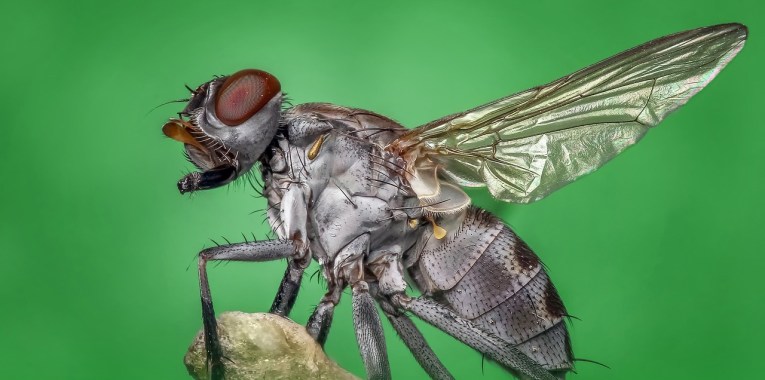
I hate flies. Are you with me in that? A few months ago, the doors of the building where my office is located were left open for an extended period of time and flies got in. Lots of flies. And they all seemed to wind up in my office. I systematically hunted them down and killed them one by one. I had to. I wasn’t going to be able to get any work done until I did. The next plague God sent against the Egyptians was the plague of flies. With this fourth plague, what has become the standard script changes just a bit. Let’s talk about what’s different here and how God demonstration of HIs power to Pharaoh is developing.

Read the rest…