“Moses took the bones of Joseph with him, because Joseph had made the Israelites swear a solemn oath, saying, ‘God will certainly come to your aid; then you must take my bones with you from this place.'” (CSB – Read the chapter)
This morning we are going to wrap up Exodus 13. Tomorrow, Lord willing, we will jump into one of the most exciting, but also most challenging, parts of the story we have yet encountered. Verse 19 here isn’t the last verse in the chapter, but it is essentially an editorial note, so I saved it for the end. This one of those notes we find in the Scriptures that seem a bit random and really don’t help to advance the story at all. In spite of that, though, I think there are two quick things worth noting here. Let’s talk about each of them briefly today and that’ll be that.
“When Pharaoh heard about this, he tried to kill Moses. But Moses fled from Pharaoh and went to live in the land of Midian, and sat down by a well. Now the priest of Midian had seven daughters. They came to draw water and filled the troughs to water their father’s flock. Then some shepherds arrived and drove them away, but Moses came to their rescue and watered their flock. When they returned to their father Reuel, he asked, ‘Why have you come back so quickly today?’ They answered, ‘An Egyptian rescued us from the shepherds. He even drew water for us and watered the flock.’ ‘So where is he?’ he asked his daughters? ‘Why then did you leave the man behind? Invite him to eat dinner.'” (CSB – Read the chapter)
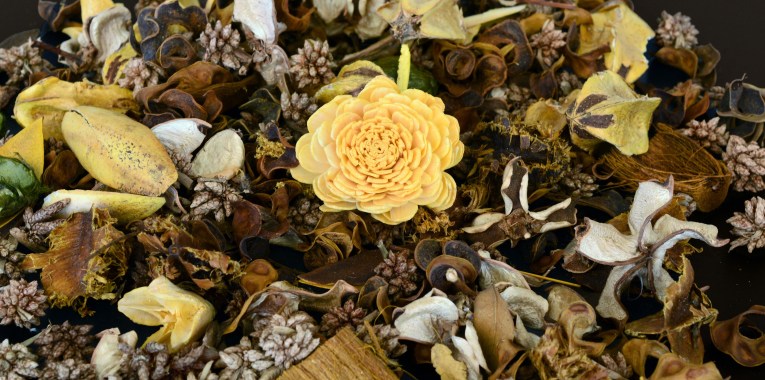
When you hear something described as putrid, your first instinct is probably not going to be to go over and take a big whiff. Unless you are an adolescent boy, in which case, yes, that may very well be your first instinct. Putrid things don’t tend to smell very good. How ironic it is, then, that the word “potpourri,” which typically is used for a mixture of dried bits of flowers and other odds and ends that have been perfumed to provide a pleasing fragrance to a room is a transliteration of a French word that literally means, ‘the putrid pot.” When I tell you that today’s post is going to be a bit of a potpourri of things, though, I don’t have that in mind at all, and I promise it won’t smell. I’m thinking rather of potpourri in the Jeopardy sense of a mixture of all sorts of different things, a meaning which, interestingly, also comes from the same French word that originally referred to a Spanish stew that could include a whole fridge full of odds and ends. That’s a long introduction to tell you that today we are going to look at a number of different things in these verses that aren’t necessarily connected, but which are all interesting in their own right, and will help you get a better sense of what is happening here in a passage that usually gets overlooked on our way to the more exciting third chapter of Exodus. Let’s dive right in.
This week we are kicking off a new teaching series called, A Love Story. For the next four weeks we are going to be walking through one of the greatest love stories in the Scriptures. It is found in a little book tucked away in an easily overlooked corner of the Hebrew Bible called Ruth. Rather than just telling the story, we are going to experience together through the eyes of the characters who were actually in it. Read the story for yourself, and then take some time with this message and encounter for perhaps the first time through one who was there.
When Everything Falls Apart
I love a good story. Don’t you? There are just some ideas we can communicate better through the lens of a story than we can by plain instruction or by facts and figures. Now, we still need those, but stories are powerful things. There’s a reason so much of what we find in the Scriptures comes through the lens of a story. Do you know what’s even better than a regular, old story, though? A love story. Love stories are really powerful. There’s a reason Hallmark is a made-for-TV-producing juggernaut and that multiple different networks and streaming services are basically cut-and-pasting their storytelling format…especially during the Advent season.


 The Nexus