
Digging in Deeper: Romans 11:25-29

“I don’t want you to be ignorant of this mystery, brothers and sisters, so that you will not be conceited: A partial hardening has come upon Israel until the fullness of the Gentiles has come in. And in this way all Israel will be saved, as it is written, ‘The Deliverer will come from Zion; he will turn godlessness away from Jacob. And this will be my covenant with them when I take away their sins.’ Regarding the gospel, they are enemies for your advantage, but regarding election, they are loved because of the patriarchs, since God’s gracious gifts and calling are irrevocable.” (CSB – Read the chapter)

With Paul’s help, we have established that the designation “Israel” does not mean what it has traditionally been understood to mean. It was never intended to refer only to a genetic tribe of people. It was always intended to refer to those people who by faith lived in pursuit of a covenantal relationship with God. The confusion here comes from the fact that one of the major covenants God made was with a genetic tribe that was made up of the descendants of the men to whom God gave the name Israel. Yet not every member of that tribe abided by the covenant such that not all of Israel was God’s Israel. Still, though, God put that tribe through a lot in using them to reveal Himself to the world. Does He have any plans for those who rejected Him? Paul seems to think so. Let’s explore this next part of chapter 11 as we draw near the end of this section of the letter.

Read the rest…
Morning Musing: Romans 4:17-21

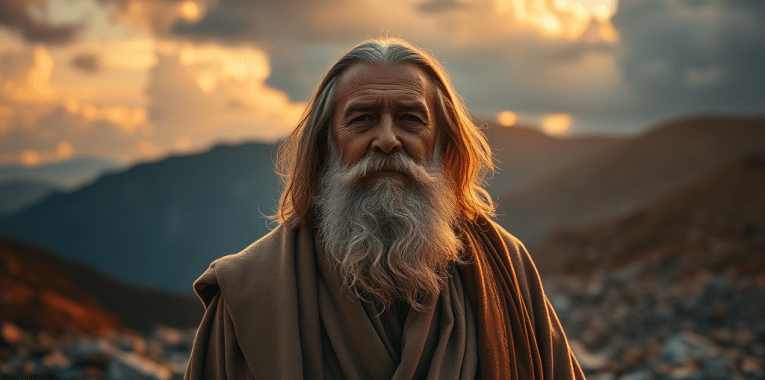
“As it is written: ‘I have made you the father of many nations’ – in the presence of the God in whom he believed, the one who gives life to the dead and calls things into existence that do not exist. He believed, hoping against hope, so that he became the father of many nations according to what had been spoken: So will your descendants be. He did not weaken in faith when he considered his own body to be already dead (since he was about a hundred years old) and also the deadness of Sarah’s womb. He did not waver in unbelief at God’s promise but was strengthened in his faith and gave glory to God, because he was fully convinced that what God had promised, he was also able to do.” (CSB – Read the chapter)

One of the more incredible things about the Scriptures is, other than Jesus, it doesn’t make any of the characters into heroes. Yes, some of them are praised highly for one character trait or another, but they are all broken in some way. They all have a fatal flaw or twelve that prevents them from achieving God’s righteousness and experiencing the full goodness of His plans on their own. Abraham is most definitely included in this less-than-perfect club. But he still got some things right. Let’s talk about what Abraham got wrong, what he got right, and the example he sets for us.

Read the rest…

Morning Musing: Exodus 20:8-11

“Remember the Sabbath day, to keep it holy: You are to labor six days and do all your work, but the seventh day is a Sabbath to the Lord your God. You must not do any work – you, your son or daughter, your male or female servant, your livestock, or the resident alien who is within your city gates. For the Lord made the heavens and the earth, the sea, and everything in them in six days; then he rested on the seventh day. Therefore the Lord blessed the Sabbath day and declared it holy.” (CSB – Read the chapter)

Some of the fieriest conflicts Jesus had during His ministry were over the Sabbath. Throughout much of the history covered by the Old Testament, Israel didn’t really keep this command very well. After the Babylonian Exile, though, and by the time Jesus came onto the scene, they were positively radical about it. The weight of this command bore heavily on the shoulders of the people. We’ve talked before about the Sabbath when God first introduced it to the people back in chapter 16. Let’s reflect again here on what God was helping the people further understand.

Rest the rest…

Digging in Deeper: Joshua 3:8

“And as for you, command the priests who bear the ark of the covenant, ‘When you come to the brink of the waters of the Jordan, you shall stand still in the Jordan.'”  (ESV – Read the chapter)

This has always struck me as one of the more remarkable stories in the Exodus narrative.  Here were Joshua and the people of Israel ready once again to cross the Jordan and enter the Promised Land.  The bounty of God’s provision and promise lay ahead of them.  The only thing that stands in their way is the Jordan River.  But, this should present no real trouble to them.  After all, God had already parted a whole sea for them.  What threat does a river pose? Read the rest…