
Light to Live By

In part two of our Christmas series, God Moved into the Neighborhood, we begin looking at how the process of transformation unfolds.  Initially, it’s not very comfortable.  In order to fix the system, we first have to see where and how it’s broken.  Keep reading to see how this works and how to overcome the biggest challenge to it happening.


Light to Live By

Have you ever gotten unwanted advice before?  Now, probably there are some folks out there who are far more gracious than I am, but usually when I get unwanted advice my first thought is, “Buzz off, Mr. Busy-Body!”  Who’s with me?  There’s just something a little cynical in most of us that thinks, “You know, they probably mess up at this just as much as I do.  They are in no position to be giving me advice.”  But, there is an exception to this rule.  We as a culture are slavishly reliant on the advice of experts.  If we think someone is an expert, we will listen to just about anything they say.  This phenomenon explains how we got shows like Dr. Phil and Dr. Oz.  They were both regular “experts” on Oprah who became popular enough to get their own shows.  And perhaps you’re sitting there thinking, “Well I certainly don’t listen to those quacks!  You can’t really trust anything you see on TV anyway.” Read the rest…
A Crazy Idea

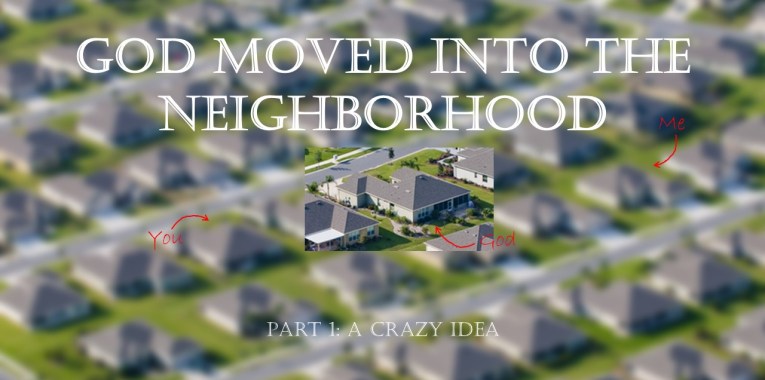
This past Sunday we began a brand-new teaching series at First Baptist, Oakboro, called God Moved into the Neighborhood.  Over the course of the next few weeks leading up to Christmas, we are going to unpack the marvelous truth that when our world was broken nearly beyond repair, God moved into the neighborhood in the person of Jesus Christ in order to transform it from the inside out.  With the help of some unexpected passages of Scripture for this time of year, we will unpack just how amazing this truth is, how the process of transformation unfolds, and how we should respond to it.  Don’t miss a single part of this powerful story.

A Crazy Idea

Have you ever had the opportunity to drive through an old neighborhood and thought, “Why haven’t they just bulldozed this whole place?  This is a mess!  This is an eyesore!  The people still living here should get a medal.”  You may have heard about the challenges facing the city of Detroit over the past few years.  World Magazine did a feature story on one neighborhood in the city a couple of years ago as a way of giving some perspective on how things really are.  Because of the city’s well-publicized problems, the neighborhood had been pretty much forgotten.  One in three homes had been abandoned.  Street lights didn’t have power going to them anymore.  There was no police coverage for the neighborhood due to budget restrictions.  There are no good grocery stores nearby.  Jobs are scarce.  Folks in the neighborhood have started doing basically some urban farming in order to provide food for themselves and their neighbors.  They raise a variety of produce as well as chickens and goats.  And when asked whether or not all this was legal within city limits they essentially said, “We’ll worry about forgiveness if we ever get caught…in the meantime, we’ve got to survive.”  Closer to home, though, some of you have perhaps driven through some of the more run-down neighborhoods of Charlotte or even Albemarle; neighborhoods where you didn’t really feel safe even driving down the street.  How do we respond to a place like this? Read the rest…