
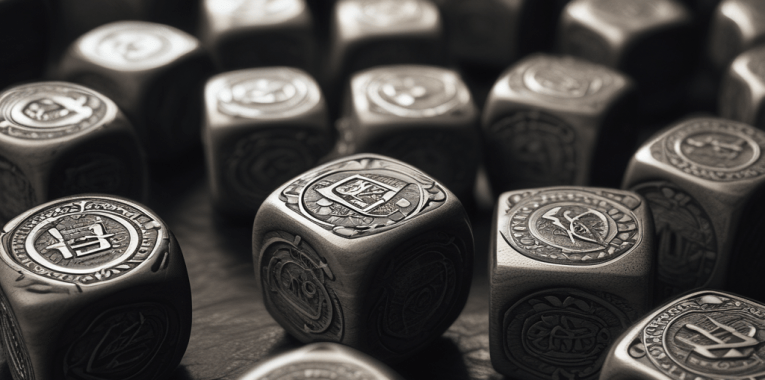
“You are to make an embroidered breastpiece for making decisions. Make it with the same workmanship as the ephod; make it of gold, of blue, purple, and scarlet yard, and of finely spun linen. It must be square and folded double, nine inches long and nine inches wide. Place a setting of gemstones on it, four rows of stones: The first row should be a row of carnelian, topaz, and emerald; the second row, a turquoise, a lapis lazuli, and a diamond; the third row, a jacinth, an agate, and an amethyst; and the fourth row, a beryl, an onyx, and a jasper. They should be adorned with gold filigree in their settings. The twelve stones are to correspond to the names of Israel’s sons. Each stone must be engraved like a seal, with one of the names of the twelve tribes. . .Whenever he enters the sanctuary, Aaron is to carry the names of Israel’s sons over his heart on the breastpiece for decisions, as a continual reminder before the Lord. Place the Urim and Thummim in the breast piece for decisions, so that they will also be over Aaron’s heart whenever he comes before the Lord. Aaron will continually carry the means of decisions for the Israelites over his heart before the Lord.” (CSB – Read the chapter)
How do you figure out what God (or the gods, if you prefer) wants? That has been a question plaguing humanity since time immemorial. And we have come up with all sorts of ways to answer it. Some have been fairly simple and direct. Others have been entirely more complicated. Many have even crossed the line into being downright nefarious. The goal, though, has always been the same: to figure out what God wants so that we can live in light of that. For Israel, part of the answer to that question was the breastpiece. Let’s talk about this next part of the priestly garments.
Read the rest…


 The Nexus