
Morning Musing: Exodus 28:1-5

“Have your brother Aaron, with his sons, come to you from the ISraelites to serve me as priests – Aaron, his sons Nadab and Abihu, Eleazar and Ithamar. Make holy garments for your brother Aaron, for glory and beauty. You are to instruct all the skilled artisans, whom I have filled with a spirit of wisdom, to make Aaron’s garments for consecrating him to serve me as priest. These are the garments that they must make: a breast piece, an ephod, a robe, a specially woven tunic, a turban, and a sash. They are to make holy garments for your brother Aaron and his sons so that they may serve me as priests. They should use gold; blue, purple, and scarlet yarn; and fine linen.” (CSB – Read the chapter)

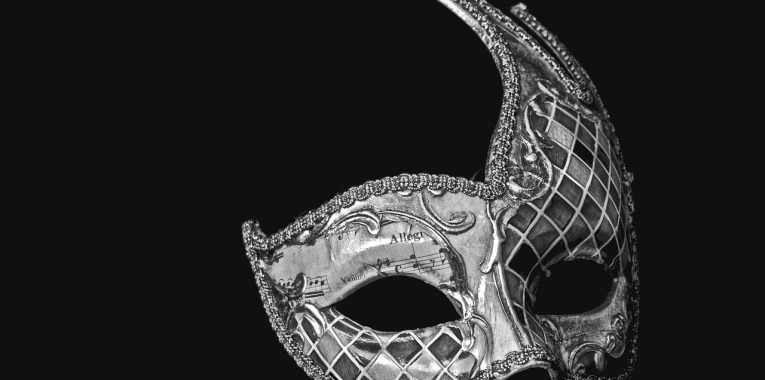
Mark Twain is famous for all sorts of literary things. His books, of course, are the most widely known, but he’s also famous for all kinds of witticisms. He was like the Benjamin Franklin of his era. One of his aphorisms was the observation that clothes make a man. I never liked that idea very much growing up because I wasn’t ever a big fan of having to dress up for anything (much to my parents’ regular frustration…something my own kids are paying me back for now.) And yet, as I’ve grown and gained a little bit more wisdom, I understand better just how right he was. This next part of the tabernacle instructions doesn’t tell us anything about what it looks like. It’s all about what the people leading worship in it were supposed to wear. Let’s take a look at the introduction to this next section as we prepare to examine all the priestly garments in the coming days.

Read the rest…
Morning Musing: 27:20-21

“You are to command the Israelites to bring you pure oil from crushed olives for the light, in order to keep the lamp burning regularly. In the tent of meeting outside the curtain that is in front of the testimony, Aaron and his sons are to tend the lamp from evening until morning before the Lord. This is to be a permanent statute for the Israelites throughout their generations.” (CSB – Read the chapter)

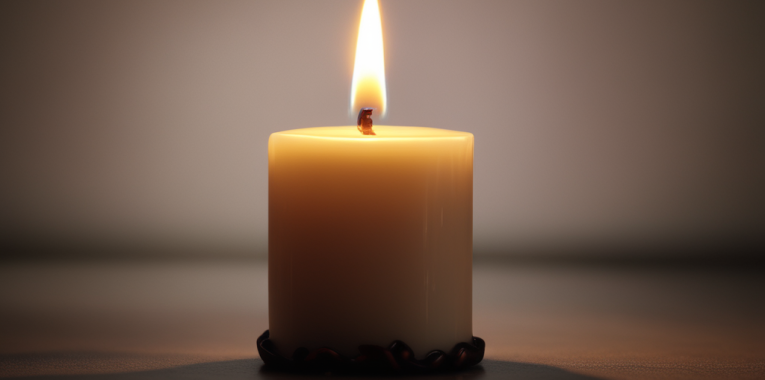
Candles have long played an important role in religious ceremonies and non-religious ones alike. The symbolism of light is easy and obvious to make. With nearly all of the main structures of the tabernacle now described and laid out for Moses to share with the Israelites, God turns His attention to some of the finer details. He starts with what will be the main source of light for the tabernacle. Let’s talk about oil, light, and seeing what’s really there.

Read the rest…

Morning Musing: Exodus 27:1-8

“You are to construct the altar of acacia wood. The altar must be square, 7.5 feet long, and 7.5 feet wide; it must be 4.5 feet high. Make horns for it on its four corners; the horns are to be of one piece. Overlay it with bronze. Make its pots for removing ashes, and its shovels, basins, meat forks, and firepans; make all its utensils of bronze. Construct a grate for it of bronze mesh, and make four bronze rings on the mesh at its four corners. Set it below, under the altar’s ledge, so that the mesh comes halfway up the altar. Then make poles for the altar, poles of acacia wood, and overlay them with bronze. The poles are to be inserted into the rings so that the poles are on two sides of the altar when it is carried. Construct the altar with boards so that it is hollow. They are to make it just as it was shown to you on the mountain.” (CSB – Read the chapter)

The sacrificial system formed the heart of Israel’s worship of Yahweh. As the apostle Paul would later explain, the just consequence for sin is death. When sin occurs, a life that belongs to God (because all life belongs to God as He is the creator of all life) is being taken from Him. If that life is not return to God, it will remain separated from Him. If it is to be reconciled to God, though, it must be returned to Him. If we don’t have our own lives any longer because they have been returned to God, then we are without life, or dead. Relationships aren’t possible with the dead, though, and God created us to be in relationship with Him. The sacrificial system took a means of worship the people already understood and graciously made it a way for their sins to be covered by the substitutionary death of an animal so they could approach God’s presence. Because of all this, the altar was really important. Let’s talk about the alter here and explore some of its details.

Read the rest…

Morning Musing: Exodus 26:1

“You are to construct the tabernacle itself with ten curtains. You must make them of finely spun linen, and blue, purple, and scarlet yarn, with a design of cherubim worked into them.” (CSB – Read the chapter)

When Washington, D.C. was designed, the goal was to create a capital city that would make a foreign visitor feel a sense of awe at the power of the nation whose capital looked like this. How a space looks affects both its function and its feel. If that weren’t the case, we wouldn’t have several whole television networks dedicated to home design and repair. If a space isn’t designed with its purpose in mind, we won’t ever quite feel comfortable doing whatever it is the space is for in it. God’s directions for the building the tabernacle and later the temple are almost mind-numbingly specific. Yet it only makes sense that there’s a reason for the specificity. Let’s talk about the tabernacle itself and what to think about this chapter that doesn’t make for very exciting reading.

Read the rest…

Morning Musing: Exodus 25:31, 36, 39-40

“You are to make a lampstand out of pure, hammered gold. It is to be made of one piece; it’s base and shaft, its ornamental cups, and its buds and petals. . .Their buds and branches are to be of one piece. All of it is to be a single hammered piece of pure gold. . .The lampstand with all these utensils is to be made from seventy-five pounds of pure gold. Be careful to make them according to the pattern you have been shown on the mountain.” (CSB – Read the chapter)

Light is necessary for life. Okay, I know that’s not strictly true. There are certain plants and animals that have evolved and adapted to thrive in the dark. But for human life, light is a must. We were made to live in the light both literally and metaphorically. Speaking of the metaphorical sense of light, it has been possessed of a rich spiritual meaning in nearly every human religion. The religion God was directing the Israelites to build around their worship of Him was no exception. Let’s talk about the lampstand God told the people to build.

Read the rest…