

Morning Musing: Matthew 10:37-38

“The one who loves a father or mother more than me is not worthy of me; the one who loves a son or daughter more than me is not worthy of me. And whoever doesn’t take up his cross and follow me is not worthy of me.” (CSB – Read the chapter)

Today is going to be just a little bit different than our normal Friday conversations usually go. There are several reasons for this including the priority I endeavor to give to life and ministry (in that order) over writing these. The reason for this particular post as well as next week’s post at this time, Lord willing, is that the adult Bible study I teach on Wednesday nights has been having some powerful and challenging conversations as we have been working our way through Matthew’s Gospel. Our most recent conversation struck me as important enough that I wanted to share a glimpse of it with you. I’m going to keep this pretty short and to-the-point, but it’s worth your time to begin reflecting on the idea because it is a life-changing one. The idea is this: Are you worthy of Jesus?

Read the rest…
Morning Musing: Exodus 12:24-27

“‘Keep this command permanently as a statute for you and your descendants. When you enter the land that the Lord will give you as he promised, you are to observe this ceremony. When your children ask you, “What does this ceremony mean to you?” you are to reply, “It is the Passover sacrifice to the Lord, for he passed over the houses of the Israelites in Egypt when he struck the Egyptians, and he spared our homes.”‘ So the people knelt low and worshiped.” (CSB – Read the chapter)

Sometimes God reveals Himself in ways that are clear, direct, and unmistakable. More often, though, He works behind the scenes and gives us the task of passing along information about and faith in Him from one generation to the next. He does not, however, leave us alone and unequipped to do this. His big reveals are intended to become tools for us to use in passing on knowledge of Him generationally. We see this in the next part of the story of the Exodus. Let’s talk this morning about the last thing Moses says to the people before sending them on their way to get ready for the first Passover.

Read the rest…

Morning Musing: Exodus 12:21-23

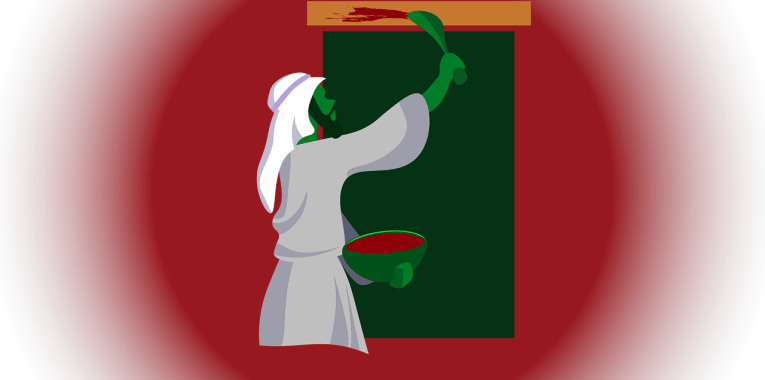
“Then Moses summoned all the elders of Israel and said to them, ‘Go, select an animal from the flock according to your families, and slaughter the Passover animal. Take a cluster of hyssop, dip it in the blood that is in the basin, and brush the lintel and the two doorposts with some of the blood in the basin. None of you may go out the door of his house until morning. When the Lord passes through to strike Egypt and sees the blood on the lintel and the two doorposts, he will pass over the door and not let the destroyer enter your houses to strike you.'” (CSB – Read the chapter)

Blood is really important. That’s true physically, of course, as we die if we lose too much of it. It’s also true in various other symbolic ways. Relationally speaking, we talk about blood relatives versus those who are just relatives by marriage. Familialy, there is the saying that “blood is thicker than water,” meaning we are going to have closer relationships with our family members than non-family members. When they put ratings on movies, part of what determines how restrictive of a rating a particular film gets is how much blood gets splattered across the screen. Bloody violence gets rated higher than non-bloody violence (think Deadpool versus Star Wars). Blood has also long played an important role in our religious practices. This was the case in the first Passover. Let’s talk about why and what is going on in this next part of the story.

Read the rest…

Morning Musing: Exodus 12:14-15, 19-20

“This day is to be a memorial for you, and you must celebrate it as a festival to the Lord. You are to celebrate it throughout your generations as a permanent statute. You must eat unleavened bread for seven days. On the first day you must remove yeast from your houses. Whoever eats what is leavened from the first day through the seventh day must be cut off from Israel. . . .Yeast must not be found in your houses for seven days. If anyone eats something leavened, that person, whether a resident alien or native of the land, must be cut off from the community of Israel. Do not eat anything leavened; eat unleavened bread in all your homes.” (CSB – Read the chapter)

Every nation has a rhythm. There are things that come around every year that everyone celebrates together. These festivals and ceremonies help to give that nation its own identity. Observing them each year is important to the health and longevity of the people. If they lose sight of these, they will gradually begin to forget who they are. At that point, they begin to enter the dangerous territory of losing themselves. God wasn’t simply leading the people of Israel out of Egypt in the Exodus. He was building them into something they had never been before: a nation. As a part of this process, they needed to begin to develop an identity. In the event of the Passover, God was not simply bringing judgment to Egypt, nor simply helping Israel punch their ticket out of there. He was laying the foundation for a ritual that would define who they were as a people. Let’s talk about what is going on here.

Read the rest…

Morning Musing: Exodus 12:12-13

“I will pass through the land of Egypt on that night and strike every firstborn male in the land of Egypt, both people and animals. I am the Lord; I will execute judgments against all the gods of Egypt. The blood on the houses where you are staying will be a distinguishing mark for you; when I see the blood, I will pass over you. No plague will be among you to destroy you when I strike the land of Egypt.” (CSB – Read the chapter)

One of the ministries I follow fairly closely has a phrase they repeat pretty regularly. It goes like this: ideas have consequences; bad ideas have victims. When we believe things that are wrong, not only will we do things that are wrong, but bad things will eventually come to us and those around us. The wrong beliefs of the people of Egypt had finally brought them to the point we find ourselves addressing this morning. God was bringing judgment against the nation in the form of the death of all of its firstborn. We have talked about it once before. We’ll talk about it one more time in the days yet to come, Lord willing. Today, let’s take a look at a couple of details in this next part of the story that give us a better picture of what was really going on here, and the nature of God’s perfect justice.

Read the rest…