Digging in Deeper: Romans 12:12

“Rejoice in hope; be patient in affliction; be persistent in prayer.” (CSB – Read the chapter)

As a longtime fan of the Kansas City Royals, I know what wishful thinking is. A decade ago now, all the metaphorical baseball planets aligned, and we were genuinely really good. Since then? And for most of the thirty years before then? Not so much. In just the last 25 years alone they’ve lost more than 100 games seven times, and gotten close to that grim marker of a truly terrible season another four times. And yet in almost every season there’s a stretch when they actually look like they’re going to be a real baseball team. The fans start getting excited. And you let yourself think, “This is finally the season they’re going to turn it around.” But they almost never do. Instead, we have learned to be patient in affliction and persistent in prayer. Real hope, though, has not given us much reason for rejoicing. As it turns out, all three of these ideas are commands Paul issues next in his list of lifestyle characteristics of a follower of Jesus. Let’s keep rolling with him.

Read the rest…

Spiritual GPS

Over the past couple of weeks, we have been talking about prayer. We have talked about what prayer is (a conversation with a God who loves us), and one powerful thing prayer can accomplish in our lives (bring God’s peace). But experiencing these things doesn’t seem to be something we can do on our own. We need help. Thankfully God provides that help for us. As we wrap up our series, Talking to God, today, we are talking about this help and how we can receive it.

Spiritual GPS

Alright, I’m going to split the room into two groups for a minute this morning: those folks 40 and up, and those folks 40 and under. Now, for the first group, do you remember navigating new places before GPS? I remember needing to drive around the city of Phoenix for a couple of days many years ago. Before my trip down there, I got on Google Maps and printed out individual maps of all the places I needed to go—several of them actually. I’m not any good with written or spoken directions. You can tell me how to get somewhere and it will zoom in one ear and out the other. I have to actually see it so I can form a mental map. Then I’m good to go. I suspect that most folks of a certain age have distinct memories of pulling out a map of a new city or maybe even a whole atlas for a long car trip, and navigating your way to your destination. 

Read the rest…

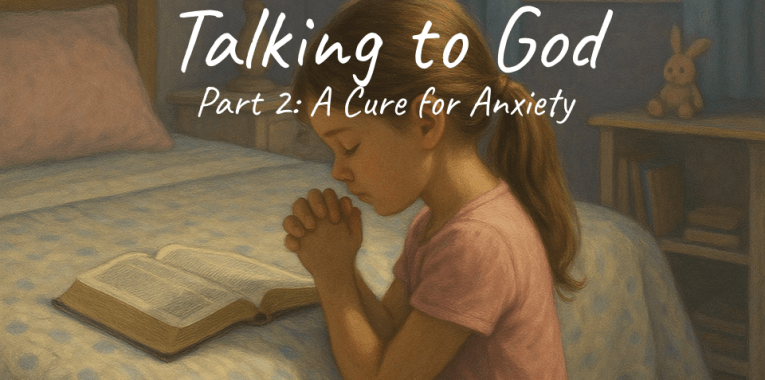
A Cure for Anxiety

Worry is something all of us encounter from time to time. Our circumstances stances get hard, they start to slip out of our control, and our anxiety level starts rising. The harder we cling to a need for control, the faster our anxiety rises. But what if there was a way to keep this from happening in the first place? As we continue our series, Talking to God, today we are talking about one of the most powerful potential impacts of prayer in our life. This isn’t a clinical solution for anxiety that has grown beyond our ability to manage it, but for much of the everyday, garden variety anxiety we all face, there’s a lot of potential for impact here. Let’s talk about prayer, anxiety, and how one helps with the other.

A Cure for Anxiety

Have you ever had a God-experience that just stuck with you? Not all of them do. But every now and then, you have one that you just can’t shake. Depending on the circumstances, that may be a hard thing, but often these kinds of experiences serve as important markers in our hearts and minds of God’s character. I had one of these when I was in college. I can still vividly remember a great deal of the situation. One spring, I got my schedule for the fall semester. I was going to have a pretty large class load, so I had worked really hard to make sure everything coordinated just right. Then, I got a note from my advisor that one of the classes I signed up for wasn’t going to be available, throwing my entire schedule into chaos. This disruption of my nice, neat, perfectly organized plan wasn’t just a threat to the following semester, but had the potential of moving back my entire graduation date. I quickly went into a tailspin of doubt and anxiety. But it was going to be a couple of days before I could get in with my advisor to work out a solution. Until then, there wasn’t anything I could do. So, I did the only thing I could do: I prayed. 

Read the rest…

A Simple Conversation

Everybody prays. Every single religion has some version of prayer. Even people who don’t have any particular religion to which they subscribe still report praying at least on occasion. Looking up physically or at least mentally is an incredible natural gesture. Our inherent awareness that there is something bigger than us in this world to which we can turn for help when we need has proven remarkably hard to shake. But as much as everyone prays, one of the main requests pastors get from their members is instruction on how to pray better, how to pray more effectively. Today we are kicking off a brand-new, three-part teaching series aimed at addressing that concern. Let’s talk about prayer, what it is, what it does, and how to get it right.

A Simple Conversation

When kids are little one of the most natural motions for them to make is to reach up. Your kids did it. They may still do it. My kids all did it when they were the right size. Two of them look me in the eye now, so that season has passed, but it wasn’t all that long ago that their reaching up was a normal thing. Why is it that they reached up like they did? Because they wanted up. They wanted to get somewhere higher than they currently were, and into the comfort and safety of your arms. So, they reached up. 

Read the rest…

Morning Musing: 1 Timothy 2:1-2

“First of all, then, I urge that petitions, prayers, intercessions, and thanksgivings be made for everyone, for kings and all those who are in authority, so that we may lead a tranquil and quiet life in all godliness and dignity.” (CSB – Read the chapter)

What do you do when you don’t have any power? Well, one approach is to try to get some power. That would seem to make sense. After all, power is a good thing. We all want to have some power. But what about when that’s not an option? What then? You could gripe and complain. You could punish those who do have power by making their exercise of it as complicated and uncomfortable as possible. Neither of those, though, seem like terribly positive options. Much to the contrary, they will likely make things vastly more difficult for us. There is another way, though. Paul outlines a third way here could make quite a difference indeed. Let’s talk about the best thing to do when you don’t have any power.

Read the rest…