Digging in Deeper: Ecclesiastes 4:9-12

“Two are better than one because they have a good reward for their efforts. For if either falls, his companion can lift him up; but pity the one who falls without another to lift him up. Also, if two lie down together, they can keep warm; but how can one person alone keep warm? And if someone overpowers one person, two can resist him. A cord of three strands is not easily broken.” (CSB – Read the chapter)

Comic books have always been about more than the tales and exploits of super-powered heroes and villains. They have always served as vehicles for exploring and addressing deeper topics and themes. The X-Men comics, for example, have been about tolerance for those who are different. Superhero movies do the same thing. Wandavision (and Dr. Strange 2, which was just a continuation of the Wandavision story) was a study in grief. Captain America 4 was about seeking justice for the oppressed. Iron Man 3 was about dealing with anxiety. The Infinity Saga was about the infinite value of every single life. Marvel’s second-most-recent release follows this same pattern. It’s a story about heroes and villains, yes, but it’s about a whole lot more than that. I finally got to watch Thunderbolts* this week, let’s talk about why it’s so very good.

Read the rest…

Morning Musing: Romans 9:30-33

“What should we say then? Gentiles, who did not pursue righteousness, have obtained righteousness—namely the righteousness that comes from faith. But Israel, pursuing the law of righteousness, has not achieved the righteousness of the law. Why is that? Because they did not pursue it by faith, but as if it were by works. They stumbled over the stumbling stone. As it is written, ‘Look, I am putting a stone in Zion to stumble over and a rock to trip over, and the one who believes on him will not be put to shame.’” (CSB – Read the chapter)

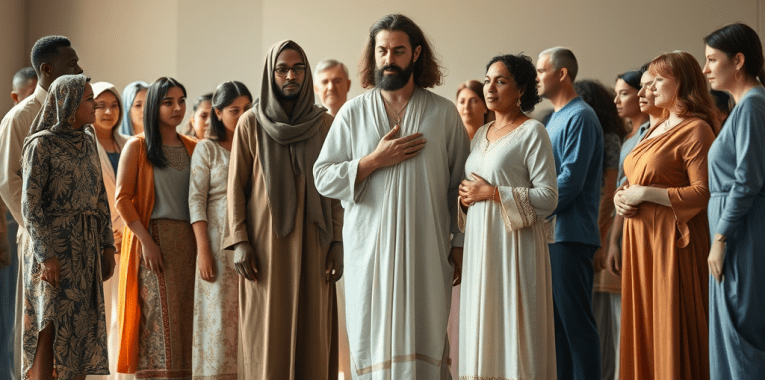
One of the dangers of successfully creating a church where everyone feels welcome is that anyone starts to come. And, when anyone starts coming, you never know who might be there. They might generally fit the mold, or they might shatter it, leaving the group trying to figure out hours to successfully integrate someone new. But what happens when so many new people who don’t fit the mold start to come that the entire mold starts to be remolded? Well, usually a church split. But sometimes all the new people connect because they’ve bought into the vision at about the same time that the old people have moved on from it. That’s the story of the church from the beginning. Let’s talk about it as we wrap up chapter 9 today.

Let me add this thought to what I said a bit ago: creating a church where everyone wants to come is really a lot of fun. It’s even more fun when you do so in the context of a culture that is intentionally welcoming and glad to receive and love new people. Being a part of what God is doing when and where He is doing it is a pretty cool experience.

I’ve been directly a part of that three times in my life. Once was in college in conjunction with a vibrant and active campus ministry. Once was 9-10 years ago when my former church really hit its stride. We went through a season of seeing an average of a family joining the church every single month for a period of about two years.

The third time I’ve been in that kind of place is now. This has been a build that’s been a long time in coming. I spent most of last year telling the church that God was preparing to do something big and to be praying for it in advance. They obviously listened because it hit and hit hard. We are right in the middle of a season of seeing at least one family join each month. Things have only accelerated into this summer, a time when many churches slow down and have dips in attendance. People are loving one another. They are caring for one another. They are building new relationships. They are worshipping and praying together. There are kids running around all over the place. And it’s a lot of fun.

But it’s messy.

People are broken by sin even when they are following Jesus. Sin makes messes. That’s just what it does. More people means more brokenness which means more messes. God’s grace is sufficient as we lean on it, and He grows us through the challenges so that we depend more on Him which in turn allows Him to accomplish more through us. That doesn’t take away, however, from the fact that it’s messy at times.

Churches tend to be places where we interact primarily with people who are like us. The more people you add to a church, though, the greater the likelihood that you add some people who are not like you. This is true even in a community that is awfully homogenous on the whole as ours is. Plus, when word gets out that a group of people does a really good loving one another other people tend to be drawn to that, especially ones who are broken and know they need that love.

The great challenge to the existing church in all of this is getting adjusted to people who don’t quite fit the mold. If a church can successfully do that, there are great things in its immediate future.

I say all of that because managing a community that is changing in ways that are sometimes difficult for long-timers to handle is part of what Paul is talking about here at the end of Romans 9.

“What should we say then?” Given everything we have been talking about in this chapter so far, what should we make of all of this? What does it mean for Israel the nation and Gentiles who are signing up to follow Jesus? What are all these new people coming in going to do to our nice, neat, well-defined and established community?

Paul goes back to the point he’s been riding on since the beginning. It all comes down to faith. The Gentiles coming into the church—who are being grafted onto the tree of Israel to use Paul’s language from chapter 11 that we’ll look at in more detail in a few weeks—are operating on faith and by that finding the righteousness of God. The Israelites rejecting the Gospel are not. As a result, they are missing out on the righteousness of God in spite of the fact that they are explicitly seeking that and even imagine themselves to have found it. But in seeking it by means other than the ones God has provided, they can imagine themselves to have found it all they want. They will still be wrong.

Paul puts it all like this: “Gentiles, who did not pursue righteousness, have obtained righteousness—namely the righteousness that comes from faith. But Israel, pursuing the law of righteousness, has not achieved the righteousness of the law. Why is that? Because they did not pursue it by faith, but as if it were by works.”

Righteousness comes by faith. Period. Paul has belabored this point throughout the letter. Being rightly related to God is not something we can manage on our own. Our sin precludes it. The only way we can manage that status is to have it shared with us by someone who has managed to achieve it. Thankfully, Jesus did that and shares it willingly with all those who come to Him accepting by faith (an eminently reasonable faith, but faith nonetheless) that He is who He says He is and that He did what He said He did.

For Gentiles receiving the Gospel, they didn’t know anything else, and so they naturally received what Paul and the other apostles were offering them. Jews, on the other hand, had baked for such a long time in a culture that had long since distorted God’s fairly clearly expressed will and intentions regarding what made someone right with Him that they struggled mightily to accept it. Jesus was just too much for them. Those, like Paul, who did finally get there immediately saw and understood how right and true it all was, but not many were about to make that leap.

None of this, though, surprised God in the least. Indeed, He had prophesied it all hundreds of years before. “They stumbled over the stumbling stone. As it is written, ‘Look, I am putting a stone in Zion to stumble over and a rock to trip over, and the one who believes on him will not be put to shame.’”

Now, we’ll talk a whole lot more about those trusting in Him not being put to shame in a few days when we get into chapter 10, but for now, focus more on that first part. God knew that what Jesus came selling was going to be hard. Many would reject Him and His words. God set Him out to be a kind of test. Some passed, but many did not. It took God’s opening the doors wide to a people who weren’t coming in with all the baggage of those who already imagined themselves to be on the inside to find people who were ready and willing to accept Him and His ways en masse. But come they did. And the church exploded because of it.

As long as we are willing to accept God’s ways as they did we can be a part of this still exploding movement. As for how that happens exactly, we’ll get into that next. Stay tuned.

Digging in Deeper: Matthew 16:19

“I will give you the keys of the kingdom of heaven, and whatever you bind on earth will have been bound in heaven, and whatever you loose on earth will have been loosed in heaven.” (CSB – Read the chapter)

Over the last few Fridays (last Friday, of course, being an exception), we have been taking a long look at Jesus’ response to Peter’s confession of Him as Messiah in Matthew 16. Jesus’ response to Peter is the first mention of the church we encounter in the Scriptures, and the two verses here are perhaps the most important foundation statement on the church in the Scriptures. In our Wednesday night Bible study group, we’ve spent a total of nearly eight weeks talking about these two verses and exploring their implications for the church today as thoroughly as we can. Needless to say, there’s a lot here. This past week, we finally finished the section. Since we’ve touched on all the rest of it here as well over the last few weeks, I thought we would take a look at the last part of it too. Let’s reflect for a few minutes today on what Jesus meant by binding and loosing things on earth and in heaven.

Read the rest…

Digging in Deeper: Matthew 16:15-18

“‘But you,’ he asked them, ‘who do you say that I am?’ Simon Peter answered, ‘You are the Messiah, the Son of the living God.’ Jesus responded, ‘Blessed are you, Simon son of Jonah, because flesh and blood did not reveal this to you, but my Father in heaven. And I also say to you that you are Peter, and on this rock I will build my church, and the gates of Hades will not overpower it.'” (CSB – Read the chapter)

I want to come back yet again this week to a passage we have looked at a couple of times recently, including just last week. If the church is the body of Christ, and if, as we talked about last time, the church is to be proclaiming the identity of Jesus to the world in everything we do, then what does it mean to be the church, and what should be the relationship of an individual follower of Jesus to the church? Let’s dig back in today to some more of the implications of what Jesus revealed about the church to His disciples.

Read the rest…

Morning Musing: Matthew 16:15-18

“‘But you,’ he asked them, ‘who do you say that I am?’ Simon Peter answered, ‘You are the Messiah, the Son of the living God.’ Jesus responded, ‘Blessed are you, Simon son of Jonah, because flesh and blood did not reveal this to you, but my Father in heaven. And I also say to you that you are Peter, and on this rock I will build my church, and the gates of Hades will not overpower it.” (CSB – Read the chapter)

I’ve been doing a lot of thinking about the church lately, what it is and how it was designed by God to work. I’ve been doing this as my own church has been going through a season of growth, especially with kids and young families. I’ve been doing that as more and more reports keep coming in from more and more different places about the growth of the church in parts of the world that have been deeply secular for a very long time. Through all of this, I’ve come away even more impressed with the profound uniqueness and goodness of the church. Let’s take some more time today to think about all of this together.

Read the rest…