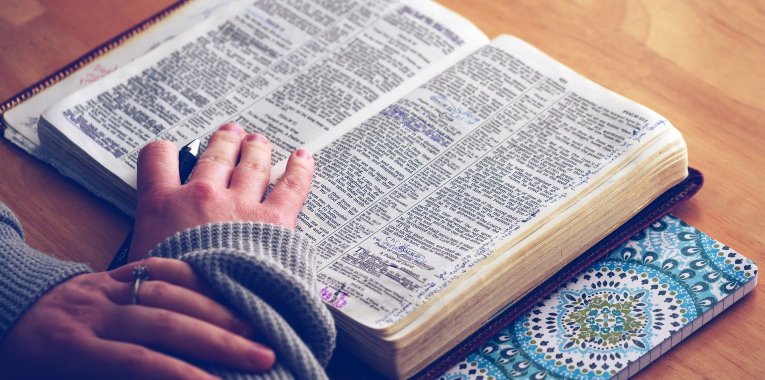
Digging in Deeper: Isaiah 30:1-5

“Woe to the rebellious children! This is the Lord’s declaration. They carry out a plan, but not mine; they make an alliance, but against my will, piling sin on top of sin. Without asking my advice they set out to go down to Egypt in order to seek shelter under Pharaoh’s protection and take refuge in Egypt’s shadow. But Pharaoh’s protection will become your shame, and refuge in Egypt’s shadow your humiliation. For though his princes are at Zoan and his messengers reach as far as Hanes, everyone will be ashamed because of a people who can’t help. They are are of no benefit, they are no help; they are goo for nothing but shame and disgrace.” (CSB – Read the chapter)

Think for a minute about who you turn to when you need advice before anyone else. Call to mind this person’s face. Think about the conversations you’ve had with him and the counsel he’s given you. What is it about this person that makes you so inclined to seek him out before anyone else? Is he particularly wise? If so, what garnered him this distinction in your mind? Have the two of you shared particularly significant experiences together and so you feel like he knows you better than anyone else? Do you seek him out because of his position? Let me ask one more question: Did you even fleetingly think about God as the person you turn to first for advice? The places we go when we need help say a lot about us. They said a lot about Israel too. Today and tomorrow, I want to look with you at an example from Isaiah that has much to teach us about where to seek help first and the character of God.

Read the rest…

Morning Musing: Zechariah 5:5-6

“Then the angel who was speaking with me came forward and told me, “Look up and see what this is that is approaching.” So I asked, “What is it?” He responded, “It’s a measuring basket that is approaching.” And he continued, “This is their iniquity in all the land.””‬‬ (CSB – Read the chapter)

Sometimes you read passages in the Bible that just don’t make any sense. It could be that the imagery is just too weird to understand. It could be that the story takes such an unexpected direction your head is spinning too much to make heads or tails of it. It could be several different things. What do we do when we encounter one of these passages? Let’s ask that together here.

Read the rest…

Morning Musing: Habakkuk 2:6-8

“Won’t all of these take up a taunt against him, with mockery and riddles about him? They will say, ‘Woe to him who amasses what is not his–how much longer?–and loads himself with goods taken in pledge.’ Won’t your creditors suddenly arise, and those who disturb you wake up? Then you will become spoil for them. Since you have plundered many nations, all the peoples who remain will plunder you–because of human bloodshed and violence against lands, cities, and all who live in them.” (CSB – Read the chapter)

Judgment finally arrives. Habakkuk–and us with him–have been waiting for this moment to arrive for quite a while. God finally speaks a word of judgment over the Babylonians. They are going to get what’s coming to them. And yet, what exactly is coming to them? Who will deliver it? And what does any of this mean for us reading more than 2,500 years later and on the other side of the empty tomb? For the next few days, that’s exactly what we’re going to be talking about.

Read the rest…

Digging in Deeper: Habakkuk 2:4

***Well, I said there weren’t going to be any posts this week, but after much thought and prayer, I decided to not go to the training course as planned. While it would have been a small gathering, the health of my family and my church family was more important. I’ll be able to take the course again in a few months when all of this nonsense has prayerfully passed. That being said, let’s dig back into Habakkuk this morning by taking a look at the verse for which it is most famous.

“Look, his ego is inflated; he is without integrity. But the righteous one will live by his faith.” (CSB – Read the chapter)

This is easily the most well-known verse in the whole of Habakkuk’s collection of prophecy. It is quoted in three different times in the New Testament; twice by Paul and once by the author of Hebrews. But what does it mean? And, if you read this same verse in different translations, you’ll find several different versions of it. Is this even the right translation? Let’s talk about it.

Read the rest…

Digging in Deeper: Micah 7:6

“Surely a son considers his father a fool, a daughter opposes her mother, and a daughter-in-law is against her mother-in-law; a man’s enemies are the men of his own household.” (CSB – Read the chapter)

Every family has a worldview. It may be a jumbled mess, but every single family has a set of things that they believe together. Children raised in that house assume on that worldview until they are old enough to question it. At that point they may consciously own it, but they might also reject it. Eventually, families often expand by marriage. This introduces new worldviews into the mix. Hopefully the two or more worldviews are similar, but they may not be. The result of all this is often chaos and conflict. Why am I starting with this when it doesn’t at all seem to be Micah’s point? Because it was Jesus’ point a few hundred years later.

Read the rest…