“My son, obey my words, and treasure my commands. Keep my commands and live, and guard my instructions as you would the pupil of your eye. Tie them to your fingers; write them on the tablet of your heart. Say to wisdom, “You are my sister,” and call understanding your relative. She will keep you from a forbidden woman, a wayward woman with her flattering talk.” (Proverbs 7:1-5 CSB – Read the chapter)
With three chapters now left in this opening section of Proverbs, one of the themes we have seen over and over again is this strong exhortation for the reader to heed the counsel and command of the writer; for the son to heed his father. Inasmuch as this is Solomon writing to his own children, though, we can receive all of this as our heavenly Father’s attempt to pass along His divine wisdom to us. So then, how can we actually receive His wisdom? Let’s talk about some ways.
“My son, don’t forget my teaching, but let your heart keep my commands; for they will bring you many days, a full life, and well-being. Never let loyalty and faithfulness leave you. Tie them around your neck; write them on the tablet of your heart. Then you will find favor and high regard with God and people.” (Proverbs 3:1-4 CSB – Read the chapter)
Have you ever been around someone who was really churchy? They constantly spoke in terms and tones that just felt sanctified. You knew they were always going to do what was right in any situation. They were clearly right with God. And nobody really liked them at all because they were so boring and insufferable. Or how about this: Have you ever been around someone who was, for lack of a better word, a scoundrel? They always skirted at the edge of what was right, crossing it whenever it was convenient…or just fun. Everybody seemed to like them. But you were pretty sure they were not on a path that was going to bring them anywhere in the vicinity of God. What if you could have the best of both worlds? Let’s talk about how.
It’s graduation season and this past Sunday we honored our graduates and scholarship recipients. With that in mind, the sermon this week was aimed right in their direction. We live in a culture that prioritizes happiness above just about everything else. We live in a culture that also tells us all the time that the best way to find that happiness is to follow our heart. But is that really how we get there? King Solomon didn’t think so. Let’s take a look at one of his more famous proverbs and talk about how to experience real happiness.
How to Be Happy
A couple of weeks ago, our youth participated in a kickball tournament. Actually, let’s correct that: they won a kickball tournament. The event was a fundraiser for a great local ministry called Faith Alive Ministries. They are driven by the idea that when Jesus’ brother, James, said that true religion is to take care of orphans and widows, that he meant it. Jordan and Taylor do an awesome job seeking out opportunities to do just that in practical ways both locally and globally.
In any event, a few weeks before the tournament, they emailed out a set of rules by which the games were going to be governed. The morning of the tournament, they had a meeting with all of the coaches to go over the rules one last time and emphasize that they would be followed carefully. The reason was pretty obvious: they wanted the whole thing to run smoothly instead of devolving into little more than an endless series of arguments about rules. That’s how kickball worked on the playground when I was in elementary school. We’d spent 20 minutes debating the rules, and about five minutes playing most days because while there were a few broadly agreed upon basics, everything else was choose-your-own-adventure…and we all tended to choose the adventure that worked best for us rather than working to make sure we had all chosen the same adventure. As long as we were committed to living as we pleased, chaos tended to be the result. The Faith Alive folks understood this and planned accordingly. On the playground…not so much. In life more generally, the same basic principle is in operation. Today, I want to reflect for just a few minutes with you on what this means for us, and how we can avoid the chaos.
“So what advantage does the Jew have? Or what is the benefit of circumcision? Considerable in every way. First, they were entrusted with the very words of God. What then? If some were unfaithful, will their unfaithfulness nullify God’s faithfulness? Absolutely not! Let God be true, even though everyone is a liar, as it is written: ‘That you may be justified in your words and triumph when you judge.’” (CSB – Read the chapter)
One of the things that new and still-learning followers of Jesus sometimes struggle with is whether they’ve done something to mess up God’s plans. It’s an easy thought to understand. If God planned for me to go left, but I go right instead, have I somehow set Him back or even derailed things He had previously set in motion? As Paul keeps up his condemnation of sin here in Romans, he starts this next section by dealing with some hypothetical questions that may be coming up in the minds of his audience. Let’s wrestle with him through the first one here.
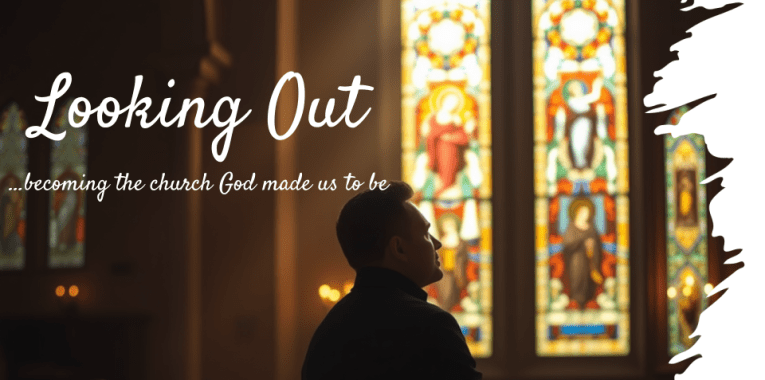
In the world of church life, this is the one Sunday that often gets forgotten about. It’s like a throwaway Sunday. I know of some churches that don’t even meet this week. Sitting between Christmas and New Year’s, most people are ready to just lie low, resting from the year past and preparing for the one that lies ahead. Yet rather than wasting such a time like this, it seems like a wiser play to redeem it. So, let’s look back and look forward at the same time; reflecting with gratitude on what has been, while anticipating with joyfulness what still lies ahead. Let’s talk about how we can be the kind of church God has made us to be.
Looking Out
So, I’m going to run out on a limb and be honest with you about something this morning. I went back and forth on this because of how it would be received, but decided that transparency is the best option. Before your minds race too far ahead of me with a list of all the things I could follow that opener with, I’ll just tell you: The idea for this message came to me in a dream. If you had a copy of the message and already read ahead, you were spared a bit of suspense there. I’m honestly not sure what it means that the idea came to me in a dream. I’m not sure how much weight to put on that. I am certain that it doesn’t mean anything significant about me. I normally have sermon subjects and passages planned out months ahead of time. But I had recently shifted some things around, and had been praying through what the message for this morning was going to be. For some reason, God seems to have chosen this way to communicate it. Prayerfully I’m getting it right. Again, I don’t know why. I don’t honestly remember any of the rest of the dream. I just remember the one idea that gave birth to what we’re going to be talking about today. I am pretty sure it is from God’s Spirit, though, because I hadn’t been thinking in this direction at all before, and the message is consistent with the Scriptures as we are going to see. All of that is to say this: I think what we are going to talk about this morning together is something God wanted to set before us as we wrap up this year and get ready for the new one arriving on Wednesday.