What Is the Bible Anyway?

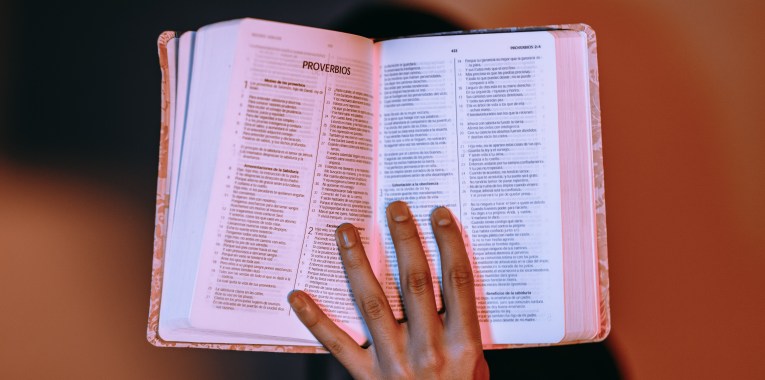
This week we kick off a brand-new teaching series. For the next four weeks, we are going to be talking about how to read the Bible. We’re going to talk about how to read it, why to read it, and what it even is in the first place. If you have ever felt like you didn’t really know what you were doing when it came to trying to read or study it, this is going to be a great series for you. Listen and share it with a friend who’s asking the same questions. You’ll be glad you did.

What Is the Bible Anyway?

If you are someone who’s been around the church for a little while, have you ever been told before that you should read your Bible? If you’re someone who hasn’t been around the church for all that long, do you remember ever being told by a well-meaning believer that you should read your Bible? Okay, here’s a follow-up question for both groups of people: Did you go from there and heed that counsel? I did. The reason I engage with the Scriptures on a daily basis today is because when I was about 13-years-old, two volunteers with my church youth group (who were both men in their late-50s or early-60s—if you find yourself in or near that category and you are not volunteering with our students, you are missing out on the opportunity to change someone’s life forever; case in point: I probably wouldn’t be a pastor today unless I had started reading my Bible all those years ago because those two men told me I should) told me that I should be reading my Bible every day and that if I did it for 21 days in a row, it would become a habit. I did and…it did. If you were another one of those folks who took that advice and started reading your Bible, did you know what you were doing when you got started? I didn’t, and I suspect there’s a pretty good chance that you didn’t either. 

Read the rest…
Digging in Deeper: Psalms 119:27

“Help me understand the meaning of your precepts so that I can meditate on your wonders.” (CSB – Read the chapter)

Granting you’re doing at least a little bit of this right now, but when was the last time you made a good faith effort to engage with the Scriptures? Notice, I didn’t say, “read your Bible.” We usually think in terms of the latter, but the first is more helpful. Either way, if you’re like most people who give the notion of following Jesus some part of the time of day, it’s probably something you’ve tried at least once or twice. And if you’re like most people who fit into that category, you probably got started pretty well, but then gradually fell off the wagon. The odds are better than average that the reason you eventually quit is that you ran into something you didn’t understand. Engaging with the Scriptures can be tough. What the writer of Psalm 119 – which is entirely dedicated to extolling the virtues and worth of God’s word – offers us here is a strategy for staying engaged even when it’s hard. Let’s talk about it.

Read the rest…

Digging in Deeper: Proverbs 11:4-6

“Wealth is not profitable on a day of wrath, but righteousness rescues from death. The righteousness of the blameless clears his path, but the wicked person will fall because of his wickedness. The righteousness of the upright rescues them, but the treacherous are trapped by their own desires.” (CSB – Read the chapter)

What benefit is there in being right with God? If you’re a follower of Jesus, before you jump all over yourself offering a litany of answers to that question, pause for just a minute and think on it. What benefit is there in being right with God? Let me ask that another way. What benefit is there in righteousness? It’s amazing how changing just a couple of words there puts a whole different spin on that question. Righteousness is a theological word. Being right with God and being righteous are generally two different concepts in our minds. Let me add one more element to this: What benefit is there in being right with people? Now, that’s a totally different question. Except it isn’t. I have been journeying through the book of Proverbs with my deacons for the past few weeks. This morning I want to reflect with you for just a minute on something that caught my attention in our passage for this week. Let’s talk about the benefits godly living.

Read the rest…

Morning Musing: Ephesians 1:4

“For he chose us in him, before the foundation of the world, to be holy and blameless in love before him.” (CSB – Read the chapter)

Do you remember Magic Eye books? They had a brief surge of popularity when I was growing up. Each picture looked like some kind of a random, repeating pattern of shapes and images when you just glanced at it. But if you looked at it just right, all of a sudden, there was something else there. I remember getting a book when I was little and spending hours trying to master the technique of seeing the hidden image. The standard approach is to hold the image right up to your nose and pull it away slowly while trying to look through it. When you got to just the right distance, your eyes would begin to perceive the depth of the 3D image hiding beneath the pattern. I finally figured out my own technique which is to cross my eyes and then slowly uncross them. What got me thinking about Magic Eye images this morning is what Paul wrote here in his opening comments in his letter to the Ephesian church. Most folks who look at it see one thing, but as I was spending some time with it recently, I saw in it something just a bit deeper. Let me share with you what I saw.

Read the rest…

Digging in Deeper: Micah 5:5

“He will be their peace. When Assyria invades our land, when it marches against our fortresses, we will raise against it seven shepherds, even eight leaders of men.”‬‬ (CSB – Read the chapter)

Did you ever try and look at one of those Magic Eye pictures? I remember having a couple of different books of them when I was growing up. The cool thing about them was that if you just looked at them they were kind of cool-looking designs. But if you looked deeper, an entirely new image appeared and in 3D to boot. My trick was always to cross my eyes and slowly uncross them. The first glance was neat, but bland. It was the second, deeper look where things got interesting. Well, we could call this a Magic Eye verse. Let me tell you why.

Read the rest…