Digging in Deeper: Exodus 18:19-23

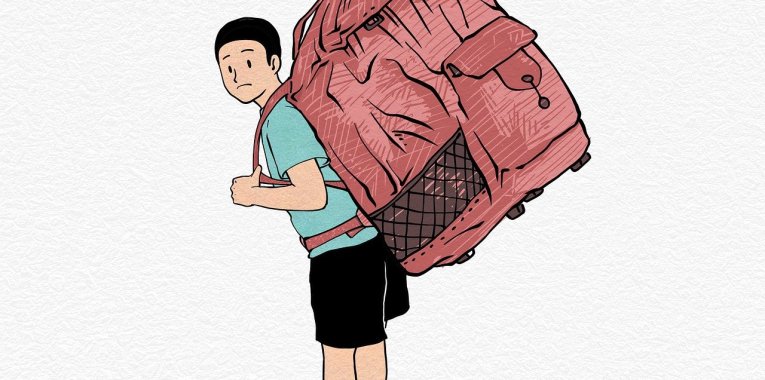
“Now listen to me; I will give you some advice, and God be with you. You be the one to represent the people before God and bring their cases to him. Instruct them about the statutes and laws, and teach them the way to live and what they must do. But you should select from all the people able men, God-fearing, trustworthy, and hating dishonest profit. Place them over the people as commanders of thousands, hundreds, fifties, and tens. They should judge the people at all times. Then they can bring you every major case but judge every minor case themselves. In this way you will lighten your load, and they will bear it with you. If you do this, and God so directs you, you will be able to endure, and also all these people will be able to go home satisfied.” (CSB – Read the chapter)

The commands of the Old Testament aren’t for us who follow Jesus today. I’ve been making that point nearly every chance I get for a couple of years now. The idea isn’t original to me by any stretch, but it is one I’ve been confirmed in thinking a number of times, most notably from the author of Hebrews. One prominent pastor makes the same point using the now infamous argument that we need to “unhitch” our faith from the Old Testament. He’s pretty widely and wildly misunderstood in this, causing him, I suspect, no small amount of grief, but the point is nonetheless valid. Yet while the Old Testament doesn’t offer direct application for our lives, it does offer plenty of wisdom worth heeding. What we see here is one of those times. Let’s talk about the advice Moses got when he was wearing himself out trying to lead Israel all on his own, and what it might mean for us.

Read the rest…

Digging in Deeper: Exodus 10:1-4

“Then the Lord said to Moses, “Go to Pharaoh, for I have hardened his heart and the hearts of his officials so that I may do these miraculous signs of mine among them, and so that you may tell your son and grandson how severely I dealt with the Egyptians and performed miraculous signs among them, and you will know that I am the Lord.” So Moses and Aaron went in to Pharaoh and told him, “This is what the Lord, the God of the Hebrews, says: How long will you refuse to humble yourself before me? Let my people go, that they may worship me. But if you refuse to let my people go, then tomorrow I will bring locusts into your territory.” (CSB – Read the chapter)

C.S. Lewis once wrote that in the end there will only be two kinds of people: those who say to the Lord, “Thy will be done,” and those to whom the Lord will say, “Thy will be done.” It makes for a wonderful and thoughtful bit of prose, but he’s not quite right. His point was that those who finally oppose the Lord will be able to be eternally separated from Him. In other words, their will to be separated will be accomplished. Beyond that, God’s will is what will happen. Pharaoh arrogantly thought he could oppose the Lord’s will and do what He wanted. God wanted him to know that he was going to lose this contest of wills and power. Because he hadn’t listened thus far, God was about to turn up the volume even more.

Read the rest…

Morning Musing: James 4:6-10

“But he gives greater grace. Therefore he says: God resists the proud but gives grace to the humble. Therefore, submit to God. Resist the devil, and he will flee from you. Draw near to God, and he will draw near to you. Cleanse your hands, sinners, and purify your hearts, you double-minded. Be miserable and mourn and weep. Let your laughter be turned to mourning and your joy to gloom. Humble yourselves before the Lord, and he will exalt you.” (CSB – Read the chapter)

We love stories of prideful people getting their comeuppance while humble people receive the honor and recognition they deserve. Arrogance is a trait we instinctively reckon at when we see it brazenly on display before us. At the same time, we are naturally drawn toward people who are constantly lifting up the people around them. And this is something pretty much every major religion points to as the way things should be in one form or fashion. But this wasn’t always the case. And it isn’t quite so common of a thing to think as we might expect. Yesterday at camp, we talked about having a humble heart. Here are a few things I learned.

Continue reading “Morning Musing: James 4:6-10”

Morning Musing: Romans 12:19-21

“Friends, do not avenge yourselves; instead, leave room for God’s wrath, because it is written, ‘Vengeance belongs to me; I will repay, says the Lord. But if your enemy is hungry, feed him. If he is thirsty, give him something to drink. For in so doing you will be heaping fiery coals on his head.’ Do not be conquered by evil, but conquer evil with good.” (CSB – Read the chapter)

We live in a culture that prizes strength, not humility and gentleness. What’s more, we are trending more in that direction every day. We cheer for politicians who promise not to serve us, but to fight for us. More and more we fight amongst ourselves, battling for worldview supremacy in what is increasingly treated as a zero-sum game. We call the presentation of ideas we don’t like “violence” such that it becomes much easier to justify actual violence used to silence them. The result of all of this is a culture that is increasingly coarse and hard, without much joy. Is there anything that can brighten up this gloomy scene? Ted Lasso seems to know, and halfway through his third season he’s well on his way to showing us. Let’s talk about the good, the bad, and one of the most explicitly Christian scenes I’ve watched in a major studio series in a long time.

Read the rest…

Power to the Nobodies

So far in our journey to discover the heart of Jesus’ being God with us, we have looked at the “God” side of things. Today, we’re going to flip them on their head to see more clearly what it means that Jesus is “with us.” I’ll give you a hint: It reveals a humility that is truly unique in a proud world. Read on in the third part of our series, God with Us, to find out just why this idea is such a good one.

Power to the Nobodies

We love rags-to-riches stories. We love hearing about people who are down on their luck, but by working really hard (and receiving a bit of good fortune), suddenly coming into a life of ease and plenty. There’s simply something that feels just to us when the arrogant rich are brought low and the humble poor are lifted up. Think about how many of our stories include this kind of an element in them. Cinderella is perhaps the most famous of them. But that same theme appears all over the place. If you think through the list of Disney Princesses, nearly half of them (there are twelve total) started out poor and became a princess because she married the prince. Of the rest, nearly all of them went through a season when they lost all the trappings of wealth before coming back into it again at the end of their story. We want to see this dramatic transition happen because most of us don’t feel rich and live vicariously through their good fortune. 

Read the rest…