
“I chose you before I formed you in the womb; I set you apart before you were born. I appointed you a prophet to the nations.” (CSB – Read the chapter)
Medical dramas are a dime a dozen these days. It seems like there’s always a new one being premiered on one streaming service or network every single year. With so many of them in circulation, it’s hard for one to really rise above the rest to be the one everyone is watching. They all try to have the one thing that sets them apart. For instance, a few years ago, Good Doctor had a good five-season run. We watched most of it, but finally gave up just before the last season. Its catch was that the main character was autistic. Playing in the same vein, Doc, features a woman who lost five years of her memory after a car crash. We watched some of the first season, but lost interest after that. In the end, they’re really all the same. There’s never really a new approach. Until The Pitt. Let’s talk for a bit about what makes it different, what it gets right, and one thing it has gotten so very, profoundly wrong.
I didn’t even know The Pitt existed until its second season started to release on HBO. We are currently a little over halfway through season one. Every year I signed up for HBO for six months during their Black Friday sale because the monthly price drops to something like three dollars. I watch everything I want to see for that time period and then drop it until the next Black Friday. After getting through the main few shows I wanted to watch, I had finally seen enough ads for this new medical drama called The Pitt that I figured I would give it a try. I’m not usually drawn to medical dramas, but HBO tends to make really good content, so I tuned in.
The Pitt takes place in an emergency department in a Pittsburgh hospital. You can see where the name comes from. From a basic storyline standpoint, it has all the same things as any other medical drama has. Cast of quirky characters? Check. A litany of bizarre medical cases? Check. Plenty of staff drama and a few unexpected twists and turns among their relationships? Check and check. But the approach The Pitt takes to all of that is one I’ve never seen before. Taking a page out of the playbook that the old series, 24, used, each episode is a single hour of a single day. Essentially, the two seasons take viewers through just two shifts in this particular ER.
This approach does a couple of interesting things. First, the kind of long-running storylines that are the staple of every other medical drama really aren’t there. Or at least, they aren’t developed like they are in other places. As the day unfolds we are gradually learning more and more about the stories of the various characters, but only in bits and pieces. It’s not a lot, but the writing is superb and has really kept our interest.
The other thing this does is that it forces the actual medical care to the forefront of the story. In most medical dramas, while there are plenty of scenes of doctors being doctors, those are really the sideshow to the inter-character drama. In The Pitt, the doctoring part gets all the attention. This particular ER is wildly overcrowded and slammed full of patients. The action bounces from one patient to the next in what seems to be the same cadence that an actual ER doctor would be bouncing from case to case. The camera work gives you the sense that you are following the doctors from one patient to the next in real time. I have found this to be incredibly engaging.
From a technical standpoint, the show is terrific. As I said, the writing is superb. The looser restraints that HBO has on their content lets the action feel more real. The acting is outstanding. Noah Wyle is one of my favorite actors, and he knows how to play a doctor really well from his long years on ER. Never has a medical drama made you feel as much like you are a part of the action in the emergency department the way this show does.
But it’s heavy. The Pitt is not a show you want to watch to be able to unwind before going to bed. It doesn’t require a lot of thinking, but the cases they have dealt with just seven hours into this first day have been intense. In the episode we watched last night, for instance, a six-year-old drowning victim is brought in from an ambulance and they are not able to save her. The reaction of her parents when Wyle’s character finally tells them the news was raw and extraordinarily emotional. I found myself almost weeping with them. And when one of the other doctors had to figure out how to tell her younger sister whose life she had sacrificed her own for when they both fell into the pool, my heart was absolutely broken for them both.
And while all of this was going on, another patient from the first episode who had died from a fentanyl overdose was finally being taken out to another hospital where an organ donation team was going to be able to use his body to save the lives of at least eight other patients around the world. The journey his parents have been on from accepting that he really is dead to allowing his body to be used for organ donation has been remarkably well portrayed. What made the whole thing even harder is that the kid wasn’t an addict at all. He was a good kid who was trying to find a way to stay awake to study, took something he got from a shady source along with a girl who was his study partner, and it wound up being laced with fentanyl. Both of them came to the hospital in bad shape. He died. She didn’t.
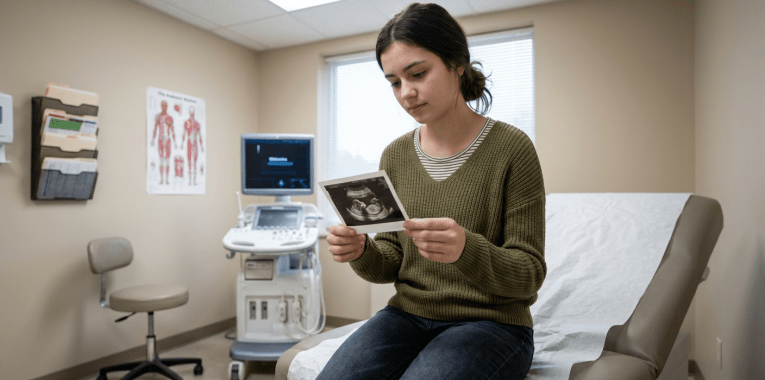
So, on the whole, The Pitt really has been good. But there is one storyline so far that left me really upset. A teenager came in with what appeared to be her mom seeking the drug mifepristone. That’s the primary drug used to cause a medical abortion, and which is today the number one cause of death in our nation by a wide margin. The girl had gotten pregnant, but very much did not want the baby. Mifepristone was the easiest solution to her “problem.”
From here the plot thickened in two ways. First, by her ultrasound measurements, she was too far along to be able to be legally given the drug. She was just a shade over 12-weeks. The doctor doing the measurements and who is perfectly willing to give her the drug, discovers this and asks Wyle’s character, the department chief, for advice. His first response is to scold her for doing an extra measurement instead of simply accepting the patient’s word about her last measurement. In other words, he scolds her for being a thorough doctor who was trying to abide by the legal requirement under which they were supposed to be operating. She understandably bristles at this. His second response is to step in on the case, repeat the measurements, but knowingly dishonestly report them to the teenager and on her chart so that they can legally give her the drug. In other words, he falsifies her medical record in order to give her the abortion she is seeking. To say I was disgusted by all of this doesn’t begin to cover it.
The other twist is that the woman posing to be her mom isn’t really her mom at all. It’s her aunt. And at the last second, her actual mother bursts into the room and makes a big scene putting a stop to the whole thing because she does not want her daughter to have the abortion. Watching in real time, I was absolutely thrilled by this. Was HBO actually going to show a mother intervening to save the life of her granddaughter? Even though the writers made it clear that she was supposed to be the villain in the whole situation by the reaction of literally every other character to her efforts to save the baby’s life, they had so far not pulled any punches in some situations not going the way the characters (or viewers) wanted them to go. So, I was hopeful. But fear not, the original doctor has a heart to heart with the mother after some more drama unfolds and convinces her to let her daughter go through with it.
The girl is given the drug, warned of some possible mild complications she may experience, and sent home. She isn’t told once about how things will likely really be for her going forward. She isn’t given an even remotely sufficient warning about the real trauma she has facing her including the process of her body expelling the soon-to-be deceased baby growing in her womb. She isn’t given any references for the counseling she will need as she grapples with the emotional trauma that she will face when it finally dawns on her that she has killed her baby. She isn’t warned at all about the possible physical trauma that is documented in a shocking number of mifepristone cases – a number which was hidden and covered up by supporters for a very long time until it was recently forced to the light. None of that. No, the courageous and caring doctors advocated fearlessly to make sure she was able to kill her baby so that her mistake (having unprotected sex with her boyfriend) didn’t cost her the rest of her life.
The whole thing was disgusting. No one advocated for the baby except the girl’s mom, and she was the bad guy until she relented. And now a young girl will live for the rest of her life with the knowledge that she killed her baby. That guilt will haunt her as she wonders what the baby would have been like. Would she have had a boy or a girl? What would his personality have been like? Would she have been an athlete or a scholar or both? What might he have accomplished over the course of his life? And what about the father? Perhaps without his knowledge at all, his son or daughter was being taken from him. He was not allowed the opportunity to be a father to what was almost assuredly his first child too. He had his own trauma if word ever even got back to him. All of this for reasons that amounts to nothing more than convenience. There was no risk to her health at all. There was only a risk to her social life.
Abortion is a moral evil in our world. Since Roe v Wade the equivalent of an entire generation of just Americans has been put to death by this abominable practice. An entire generation! And in the wake of the Dobbs decision, the number of abortion has actually gone up. Most of these now are medical abortions just like this teenage girl was seeking. There is an element of our culture that seems absolutely hell bent on putting to death as many children as they possibly can. This culture of death is stealing our future in a grotesque way. Who knows what these millions and millions of people might have been able to accomplish if they had been allowed to live. God knew, just like He knew what He had called the prophet Jeremiah to do. The odds that a young woman like Mary who got pregnant today would actually carry the Savior of the World to term are frighteningly low. And then where would we all be?
The truth is that there’s never a good reason to kill a baby. The reasoning we use to justify the decision is always flawed. The intentional and unjust taking of innocent life is always murder, and a culture that justifies murder cheapens itself in ways that gradually play out badly throughout the rest of that society. Plotlines like this one only serve to add to the moral decay. As good as The Pitt is, they got this one devastatingly wrong. If they had wanted to write a truly good story here, they would have had the doctors courageously advocating for the baby’s life, encouraging the young girl that while the journey ahead of her will be difficult, it will also be rewarding beyond measure. They would have stood with her mother in rejecting the moral rot of her aunt, seeking to prosecute her for falsely impersonating the girl’s mother in the first place. And they would have counseled her that if she changed her mind, there was a way to reverse the process if she acted quickly.
They could have celebrated life, but instead they just embraced death. What a tragedy. This is all a bit heavy for a Friday, but so is The Pitt. And sometimes we need to be reminded of the heavy so that we know where the impact of the Gospel needs to be felt the most. This is one of those places. Let’s make sure we are advancing it.

