
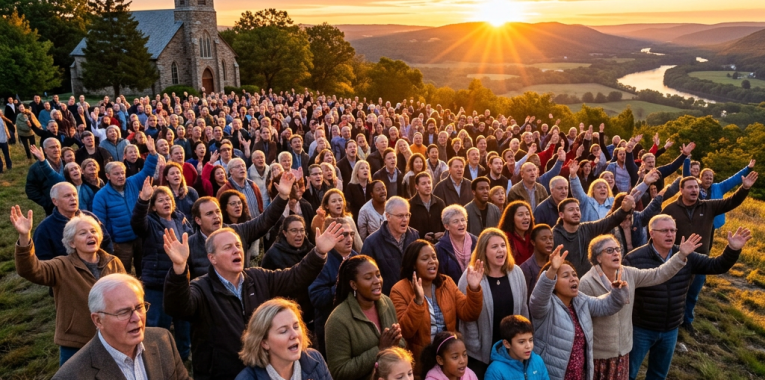
“For I know the plans I have for you”—this is the Lord’s declaration—“plans for your well-being, not for disaster, to give you a future and a hope.” (Jeremiah 29:11 CSB – Read the chapter)
When I was in seminary, I had to take two different leadership classes in my third and final year. I didn’t want to take them. They were a required part of the curriculum. Throughout that journey I struggled more than once with whether or not my path was going to lead in a circle back to the academy, or if I was bound for the local church. The local church had pretty well gotten the nod at that point, but I was far more drawn to my theology and biblical studies classes than anything else. Taking two leadership classes was about the last thing I had in mind. One of them in particular was going to make us do lots of group work which I hated the thought of even more than taking the class in the first place. Wouldn’t you know it, what I learned in that class has probably had more of an impact on my ministry since than what I learned in just about any other class. As we continue our conversation this week about the things that are contributing to my church’s growth right now, let me tell you about what it was.
Like I told you last time, I didn’t have any idea what I was doing when I officially started as the pastor of Central Baptist Church. I knew a few basics—I had to deliver a sermon each week and a Bible study on Wednesday nights. I was going to be leading some meetings (I didn’t have any idea how to do that). I was going to be baptizing people (I hadn’t done that before) and overseeing the Lord’s Supper (or that). I was going to be doing premarital counseling (I had only been married just over three years, and was in no position to tell someone else how to do it). There would be business meetings and in that church I was the moderator (I didn’t even know what Robert’s Rules of Order was at that point). I did not have the first clue about pretty much anything beyond the teaching and preaching part. That I could do.
What got me started off down the path ahead of me were two things. First, the chair of the Pastor Search Committee (who loved and supported us tremendously well during our nine years there) had told me in the interviewing process that if I made sure to have a well-prepared sermon each week, made sure the service finished by noon each week, and regularly visited the old people, I would do fine at the church. Well, I am nothing if not a rule follower, so I made sure to do those three things very consistently out of the gate. I prepared a full manuscript each week (something I still do and even which I set out for people to pick up a copy of when they enter the building on Sunday mornings to be able to follow along with me). I worked with our music director to make sure the service ended at noon (and the few times I crossed that line, I was made to know it including when I member who always sat near the front held up her wrist and tapped on her watch during the sermon so I knew I was up against the clock). And I went visiting every Tuesday and Thursday afternoon (usually with my wife or one of the babies in tow).
And Sue was right. The church loved me, and by meeting with their expectations, they were able to receive the love I had for them. Things were good, and it was a long time before that initial honeymoon period came to an end. Oh, it did, but that’s a story for another time.
The other thing that helped to direct my actions in that first year was what I learned in that leadership class. I don’t honestly remember what the class was called, but the teacher, Steve Johnson, led an organization called Strategic People Development, and he took us through his process of helping people come to understand themselves better through some personality profile tools which I still use to this day when I do premarital counseling, and of helping churches figure out who they are through a series of four evaluation questions and a long, group-work case study of creating a mission statement for a hypothetical church.
Well, the church didn’t have any kind of a mission statement when I got there. Technically it did, but it was a long unwieldy, generic thing that wasn’t serving anybody well by its existence. So, I took a full year with the deacons and figured that out. The statement we produced together became the core identity of the church and is still in place today despite the church’s being on its second pastor since my departure.
When I arrived here at First Baptist, the same thing was true about the church’s missions statement, and so I took the church through the same process to develop one. And we are still drilling that same statement into our people’s hearts and minds every single week.
So, what was the process we went through of devising this statement? I know there are several programs designed to help churches devise mission statements today. Most of these are extensive, involved, and expensive. I didn’t know about any of those when I was getting started, so I drew on what I learned from Steve, and made up my own process.
Over the course of the first year, as I met with our deacons, I took them through that series of four evaluation questions Steve taught us. What is working? What is missing that needs to be added? What is confusing that needs to be clarified? And what is not working? You always start with things that are working so your process doesn’t become a gripe session. The second question usually generates some thoughtful answers. The third question typically doesn’t yield very much unless there is something glaring. It is more often a prelude to the final question which is all but guaranteed to produce some vigorous responses.
Each month I asked the deacons one of those questions, in that order, and just let them respond however they did. For that first trip through the process I put up giant post-it notes on the walls and wrote all their responses down on those. For four months we did this. Then I put up all four of the posters we created and had them look at all of the responses they had given over the previous few months and draw out themes. From here, I took all the themes and boiled them down into a single statement. The next meeting we took this statement and did some wordsmithing on it together. By the seventh month, we had a full and complete statement.
What made this process work so well in both churches, especially considering we were doing this when I was the new pastor who was still just learning the rhythms and patterns of the church, was that it wasn’t me simply telling the church what our mission statement was going to be. I was simply taking the things they had to say about who the church was and coalescing all of this into a single statement that captured our identity. This gave them more ownership of the statement which allowed the larger church body to take more ownership of it. And, because it was nothing more than a reflection of reality with a pointer toward the direction they wanted to be going anyway, it was even easier for them to embrace. The process took a few months, but it was done entirely in-house and it didn’t cost us a dime and it didn’t require a whole bunch of extra meetings with an outside consultant no one really trusted.
From there, it was just a process of setting the statement before the church and unpacking it with them (through the lens of the Scriptures, of course). I put the statement before them on a regular basis. I made repeating it an integrated part of my welcome each week. I preached sermon series through the big ideas of the statement every year. My goal was and is for every member of the church to call that statement to mind when they think about the church. I don’t want any daylight between their thoughts of the church and this statement. I want them using it to describe the church to friends and neighbors or in general conversations when the church comes up in the community.
The mission statement does more than just give the church the mission they have been created and called by God to accomplish. It gives them an identity. It tells them who they are. This serves in turn to increase commitment. It makes recruiting volunteers easier. It allows us to say yes to things we might otherwise not do. It allows us to say no to things we might otherwise embrace.
Having this mission statement, this identity statement has played a key role in the church’s growth. Without it, our efforts to move forward would have been scattered and not nearly as productive. Knowing who we are, though, has allowed us to take concrete steps in a definite direction—namely, toward God’s kingdom.
If you want to see growth begin happening at your church, you need ask and answer a simple question: Do you know who you are? Do you know who God made you to be? If you don’t know that, you won’t be able to move effectively in the direction He created you to go. It doesn’t take a whole lot to uncover this, just a bit of critical thinking and intentionality (and perhaps some wordsmithing). It’s some effort, but effort worth giving. God’s got a clear plan for your church. If you will work with Him to uncover who He made you to be, He’ll help you set off down the path of accomplishing it.
He’ll do this because He knows what His plans for you are. No, we can’t make a direct application of this verse to our churches because that wasn’t what Jeremiah was talking about, but it is nonetheless true that God does in fact still know what His plans for you are. When we are willing to let Him lead us into understanding those plans, we will start finding the fruit of those efforts come to bear. They will be sweet indeed.
Next Friday we’ll talk about that third secret ingredient. Stay tuned.

